Short answer:
- A valuable football card collection starts with condition, player selection, and verified authenticity rather than volume.
- Rookie cards, low print runs, and professionally graded cards tend to hold value better over time.
- Buying through a known local source and tracking grading trends helps collectors avoid overpaying for common cards.
Building a collection that holds or grows in value takes more than buying packs at random. The most consistent factor separating valuable collections from boxes of commons is attention to card condition, player selection, and documentation of authenticity.
Collectors searching for Football Cards often start with modern releases because they are easy to find, but long-term value is usually tied to rookie cards, parallels with limited print runs, and cards that have been independently graded. Understanding these distinctions early prevents a collection from becoming a pile of low-demand duplicates.
Start With Condition and Centering
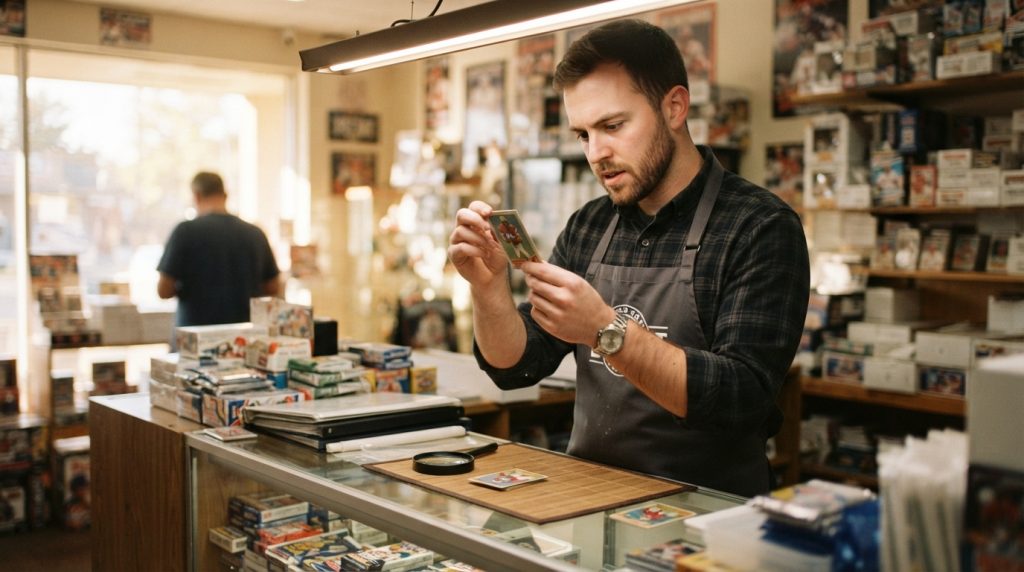
Card condition is the single biggest factor in resale value, even more than the player on the card.
- Look closely at corners, edges, and surface for printing defects or handling wear.
- Check centering by comparing the border width on all four sides.
- Store new acquisitions in penny sleeves and rigid top-loaders immediately after purchase.
A card with sharp corners and even borders can be worth several times more than the same card with soft corners, even if both are otherwise identical.
Understand Grading Before You Submit
Third-party grading assigns a numeric score that standardizes condition claims across the hobby, which buyers trust more than a seller’s own description. Submission volume has climbed sharply across the major grading companies, and overall grading volume jumped 32% year over year according to GemRate data reported by Sports Illustrated.
That growth has also affected turnaround times and pricing at the largest grading companies, so beginners should budget both time and cost before submitting a card. Not every card is worth grading. A general rule collectors use is to submit cards only when the expected value increase from a high grade clearly exceeds the submission fee and shipping risk.
| Grading Tier Consideration | Best For | Typical Tradeoff |
| Ungraded (raw) | Common cards, bulk lots | Lower cost, less buyer trust |
| Mid-tier grading service | Moderate-value rookies | Balanced cost and turnaround |
| Premium grading service | High-value vintage or rookie cards | Longer wait, higher resale confidence |
Focus on Rookies, Parallels, and Documentation
Rookie cards from a player’s first licensed season typically carry the strongest long-term demand because they mark a verifiable milestone in a career.
- Confirm the card is officially licensed and labeled as a rookie card by the manufacturer.
- Note the print run or serial number if the card is a numbered parallel.
- Keep any original packaging, certificates, or purchase receipts as ownership documentation.
Serial-numbered inserts and autographed rookie cards generally outperform base cards from the same set because scarcity is easier to verify. Buying from a shop in Londonderry, NH that can explain a card’s print run and condition before purchase reduces the risk of overpaying for a common variation mistaken for a rare one.
Build Gradually and Track the Market
Collecting football cards works best as a gradual process rather than a single large purchase.
- Set a budget per card rather than per pack to avoid chasing sunk costs.
- Track recent sales of comparable graded cards before buying or submitting for grading.
- Revisit older purchases periodically, since player performance and grading backlogs can shift values year to year.
A collection built with patience and documentation tends to be easier to sell or trade later, since buyers can verify condition and provenance without guesswork.
Frequently Asked Questions
Do all football cards need to be graded to have value? No. Many common cards hold modest value ungraded, but rookie cards, autographs, and limited parallels generally benefit most from third-party grading.
How long does professional grading typically take? Turnaround varies by service tier and current submission volume, so beginners should check current estimated turnaround times directly with the grading company before submitting.
What should a beginner buy first? Starting with a few well-centered rookie cards or numbered parallels from recognizable players is generally a more reliable entry point than buying unopened packs at random.
Is it better to buy locally or online? Buying locally allows a buyer to inspect centering, corners, and surface condition in person before paying, which is harder to verify from online photos alone.
Business Information and Resources
Based in Londonderry, NH, Card Czar serves customers across Londonderry, NH.
Readers can Visit Website To Explore Collection for published location and contact details.