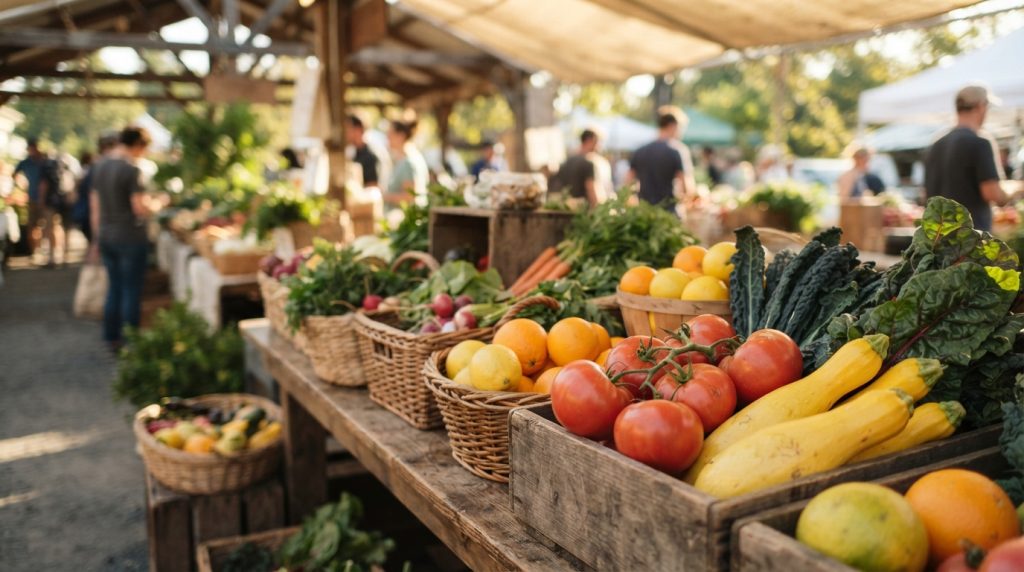
At a glance
• Seasonal produce changes as crops come into harvest in Florida and nearby growing regions.
• Peak supply can offer good flavor and value, but price and quality also depend on origin, weather, and handling.
• Ask where produce was grown and compare its condition and price before buying.
Seasonal eating means choosing produce when it is being harvested in a particular growing region. For Pensacola shoppers, that can include nearby crops as well as produce arriving from elsewhere in Florida or beyond. A crop’s presence on a shelf does not establish that it is locally in season.
At Bailey’s Produce & Nursery, shoppers can explore the current produce selection. Ask which arrivals are locally or regionally grown and which have come from other growing areas.
Why Seasonal Timing Affects Taste and Price
Seasonal supply can influence both quality and price, but neither is guaranteed. Consider these factors when comparing what is available:
• Flavor and condition depend on variety, harvest maturity, storage, and handling. Choose fruit and vegetables that look and feel appropriate for their type.
• Prices may fall when supplies increase, but transport, weather losses, and demand also affect the amount shoppers pay.
• For broader agricultural information, the USDA National Agricultural Library is a research resource. For everyday shopping, consider produce condition and storage needs alongside its season and origin.
Produce grown outside the region can still be a useful choice. Compare quality, price, and how soon you will use it rather than assuming local or seasonal always means better.
Seasonal Produce Around the Gulf Coast
The examples below reflect produce associated with Florida and nearby growing regions. Harvest windows vary by location and variety; a market may carry produce from several regions at once.
|
Season |
Regional examples |
Shopping note |
|---|---|---|
|
Spring |
Strawberries, greens, new potatoes |
Harvest timing varies across Florida and nearby states |
|
Summer |
Watermelon, okra, eggplant, peppers |
Heat favors some crops and limits others |
|
Fall |
Sweet potatoes, pecans, cool season greens |
Arrivals vary with weather and growing region |
|
Winter |
Cabbage, kale, turnips, Florida citrus |
Ask about origin and variety specific availability |
Use this as a starting point rather than a local harvest calendar or a promise of store inventory. Ask about growing region and current availability, especially after unusual weather.
Practical Tips for Building a Seasonal Shopping Habit
Shifting toward seasonal eating does not require a complete change in routine. A few simple habits make the transition easier:
1. Ask what is being harvested nearby and where each item was grown. A large display or low price alone does not prove local seasonality.
2. Ask about origin when unsure. Staff at a local farm stand or market can often confirm whether an item was grown regionally or shipped in.
3. Build a few meals around produce you expect to use promptly. Buy quantities that suit your household to limit waste.
4. Visit more than once a season. Harvest timing can shift by several weeks depending on rainfall and temperature, so availability changes throughout a single season.
A flexible shopping list helps when a planned item is unavailable or not in good condition. Choose an alternative that fits the same meal and your budget.
Frequently Asked Questions
Is seasonal produce always cheaper?
No. Larger supplies can bring lower prices, but weather, demand, origin, and transport also matter. Compare the actual price and quality.
Why can the same produce taste different through the year?
Variety, ripeness at harvest, growing conditions, storage, and handling can all affect flavor.
How can shoppers tell what is in season locally?
Ask where the produce was grown and when it was harvested, then compare that information with regional harvest guidance. Price and display size alone are not reliable indicators.
Does Gulf Coast weather affect the seasonal calendar?
Yes. Temperature and rainfall variation along the Gulf Coast can shift harvest windows earlier or later by a few weeks compared to a typical seasonal calendar.
Bailey’s Produce & Nursery in Pensacola carries fresh produce. Ask the team about current arrivals and growing regions when planning a seasonal shopping trip.
For location information, Visit Bailey’s Produce & Nursery. Confirm current hours and produce availability directly with the market.