Recap:
- Residential window tinting reduces heat gain, glare, and UV exposure through glass, which can ease strain on home cooling systems.
- Film options vary by performance level, from basic heat control to ceramic films with higher infrared rejection.
- Readers in San Juan Capistrano, CA can review local film options and service details before scheduling an installation.
Residential window tinting applies a thin film to glass surfaces to block solar heat, filter ultraviolet rays, and reduce glare without changing a home’s exterior appearance. For homeowners in warm coastal-adjacent climates, this upgrade can noticeably change how rooms feel during peak sun hours.
Coastline Tint is a service category that addresses a common issue in homes with large or south-facing windows: excessive heat buildup and sun-faded furnishings. Film is applied directly to existing glass, so no window replacement is required. This makes it a lower-cost alternative to upgrading entire window units when the goal is improved comfort rather than structural change.
Why Window Film Matters for Local Homes
San Juan Capistrano, CA experiences long stretches of direct sun exposure throughout the year, which can push indoor temperatures higher in rooms with unshaded west- or south-facing glass. Standard dual-pane windows still allow a significant share of solar heat and UV rays to pass through untreated.
Window film addresses three specific problems:
- Heat gain: Films reflect or absorb a portion of incoming solar energy before it enters the room.
- UV exposure: Films block a large percentage of ultraviolet rays, which contributes to fading in flooring, upholstery, and artwork.
- Glare: Films reduce the intensity of direct sunlight on screens and work surfaces without requiring blinds to stay closed.
According to the U.S. Department of Energy, window treatments and coverings can reduce heat gain and loss through glass, supporting lower reliance on mechanical cooling during hot months.
Types of Residential Film and What They Do
Not all window films perform the same way. Selecting the right type depends on the window orientation, existing glass type, and whether glare reduction or heat rejection is the priority.
| Film Type | Primary Benefit | Typical Use Case |
|---|---|---|
| Dyed film | Glare reduction, basic UV block | Budget-conscious glare control |
| Metalized film | Higher heat rejection | West-facing rooms with strong afternoon sun |
| Ceramic film | High infrared rejection without metal interference | Living rooms, home offices, signal-sensitive areas |
Ceramic films generally cost more upfront but avoid the signal interference that can affect metalized films near Wi-Fi routers or cell signal boosters. Homeowners weighing film types often compare upfront cost against long-term comfort and furnishing protection before deciding.
What to Expect During an Installation
A typical residential tinting appointment follows a predictable sequence, regardless of film type selected.
- Glass assessment: A technician checks window condition, existing coatings, and any seal issues that could affect film adhesion.
- Film selection: Based on window orientation and homeowner priorities, a film type is chosen for heat rejection, glare control, or UV blocking.
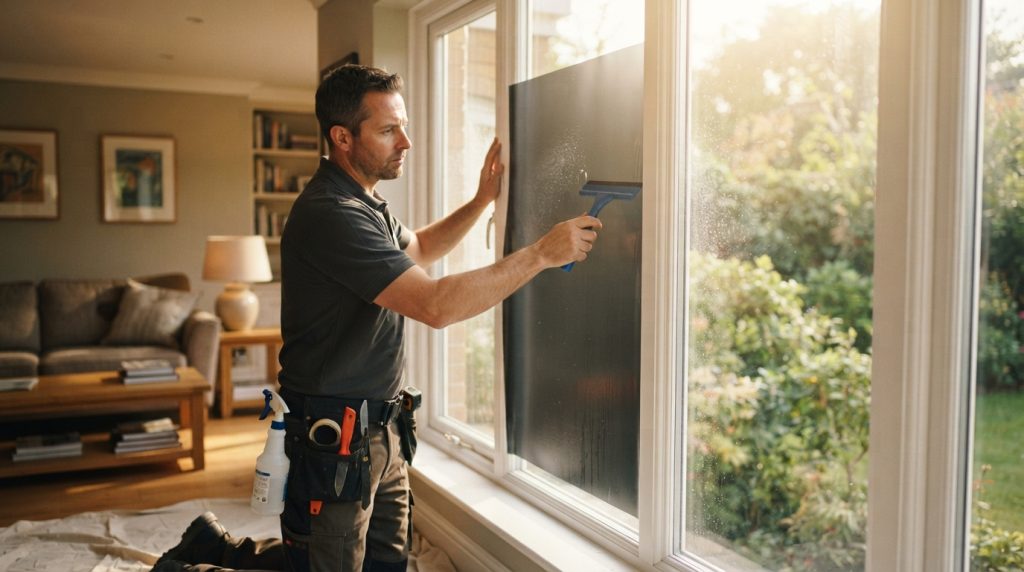
- Application: Film is cleaned, cut to size, and applied with a solution that allows it to adhere smoothly without bubbling.
- Curing period: Newly applied film needs several days to fully bond and clear of any temporary haze.
Homeowners should avoid washing treated windows with abrasive cleaners during the initial curing window to prevent lifting at the edges.
Business Info
Based in Aliso Viejo, CA, Visit Coastline Tint serves customers across San Juan Capistrano, CA with residential window film services. Service details, including published hours and contact information, are available through the business’s online profile.
Frequently Asked Questions
Does window film affect natural light inside a room? Most films reduce glare and heat without making a room feel noticeably darker, since modern films are engineered to maintain visible light transmission while blocking infrared and UV wavelengths.
How long does residential window film typically last? Lifespan varies by film quality, installation conditions, and sun exposure, so homeowners should ask about manufacturer-specific performance expectations during a consultation rather than relying on general estimates.
Can window film be removed later without damaging glass? Properly installed film can generally be removed by a professional without damaging the glass, though removal requires care to avoid leaving adhesive residue.
Is window tinting a substitute for replacing old windows? Film improves heat and glare control on existing glass but does not address structural issues like failed seals or single-pane inefficiency, which require window replacement instead.
A Note on Next Steps
Readers can Visit Coastline Tint for published location and contact details relevant to window film inquiries.