Bottom line:
• Supply chain traceability software tracks products, ingredients, and materials at every stage from origin to final sale, creating a verifiable record for compliance and quality control.
• Food and agriculture businesses in the USA face evolving federal recordkeeping requirements, making digital tracking systems a practical response rather than an optional upgrade.
• Platforms built for farm-to-retail visibility, such as those offered through Find SourceTrace on Google Maps, support traceability lot tracking and stakeholder reporting across agricultural supply chains.
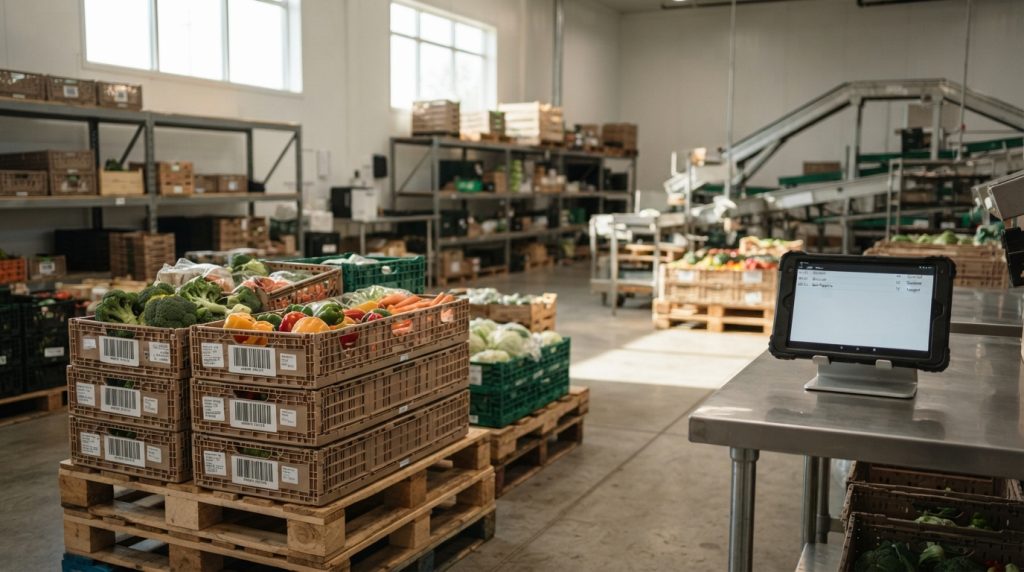
Supply chain traceability software gives businesses a digital record of where products, ingredients, or materials originated and how they moved through production, storage, and distribution. For agriculture and food operations, this type of tracking has moved from a competitive advantage to an operational necessity, particularly as retailers and regulators ask for faster, more detailed proof of origin. Supply Chain Traceability Software built for farm-level data collection, certification tracking, and multi-stakeholder visibility allows companies to document each handoff from field to retail shelf.
The core function of traceability software is straightforward: it replaces scattered paper logs and disconnected spreadsheets with a single digital trail. A buyer, auditor or food safety inspector can then trace a batch of produce or raw material back through every processing and transport step. This matters more now that federal recordkeeping expectations for high-risk foods are tightening across the USA. To see how one platform supports this, Explore SourceTrace.
Why Traceability Records Matter for Regulatory Readiness
Food businesses that handle items on the FDA’s high-risk food list face specific recordkeeping obligations under federal rules. According to the FDA’s food traceability rule guidance, covered entities must assign Traceability Lot Codes and capture Key Data Elements at each Critical Tracking Event in the supply chain.
Key recordkeeping obligations typically include:
• A written traceability plan describing how records are maintained and how foods are identified internally
• Assignment of a unique Traceability Lot Code to each batch
• Capture of Key Data Elements at receiving, transformation, creation, and shipping events
• Ability to produce an electronic, sortable record set within 24 hours of a regulatory request
Manual systems struggle to meet the sortable-spreadsheet and rapid-response expectations tied to these events. Digital traceability platforms are built to generate that exportable record automatically rather than reconstructing it after the fact.
Core Capabilities of a Traceability Platform
Most traceability systems used in agriculture and food supply chains share a common set of functions rather than a single standout feature.
1. Farm and field-level data capture – Mobile tools record farmer profiles, GIS location data, and certification status at the point of origin.
2. Stage-by-stage monitoring – Procurement, storage, processing, and logistics activity is logged as products move toward retail.
3. Quality and certification tracking – Testing results and compliance documentation are attached to specific batches or lots.
4. Dashboard reporting – Supply chain managers and auditors review aggregated data without requesting separate paper files from each supplier.
This structure is why traceability tools are frequently paired with farm management and supply chain management software rather than sold as a standalone utility.
Comparing Traceability Approaches
| Approach | Data Collection Method | Audit Response Time | Best Fit |
| Paper-based logs | Manual entry at each site | Days to weeks | Very small, single-site operations |
| Spreadsheet tracking | Manual entry, periodic upload | Hours to days | Small operations with limited suppliers |
| Mobile app and dashboard platform | Automated capture, centralized storage | Within 24 hours | Multi-site or multi-country supply chains |
Operations spanning multiple farms, processors, or countries generally need the centralized model because manual methods cannot produce a sortable record fast enough when a buyer or regulator requests one.
Frequently Asked Questions
What industries rely most on supply chain traceability software? Agriculture, food processing, and consumer goods companies use it most heavily because of certification requirements, perishability concerns, and recall risk.
Does traceability software replace a written traceability plan? No. Software supports the documentation and data capture, but businesses in the USA still need a written plan describing internal processes, lot coding, and designated regulatory contacts.
Can smaller operations use these platforms without large IT teams? Mobile-first platforms with dashboard reporting are designed for field use with minimal technical setup, which lowers the barrier for smaller or distributed teams.
How long should traceability records be kept? Retention periods depend on the applicable regulation and food category, so businesses should confirm current requirements rather than assume a single universal timeframe.
Agriculture and food businesses evaluating digital traceability tools can review published details for Find SourceTrace on Google Maps as part of their research into available platforms.

