Recap:
- Cracking, pooling water, and crumbling edges on a driveway usually signal pavement failure that calls for professional repair rather than a DIY patch.
- Climate swings in Greenville, SC, including freeze-thaw cycles, speed up asphalt deterioration and make timely inspection important.
- Hiring qualified Residential Paving Contractors early can prevent small surface issues from becoming full driveway replacements.
A driveway rarely fails overnight. Most asphalt problems start small: a hairline crack, a soft spot near a downspout, a slight dip where water collects after rain. Recognizing these early warning signs is the fastest way to decide whether a homeowner needs a sealant kit from the hardware store or a call to licensed Residential Paving Contractors who can evaluate the base layer, not just the surface.
Asphalt is a layered system. The visible top coat sits on compacted aggregate and soil, and damage to those lower layers cannot be fixed with surface patching alone. When a driveway shows structural distress rather than cosmetic wear, the repair approach changes significantly, which is why distinguishing between the two matters before any work begins.
Visible Damage That Signals a Bigger Problem
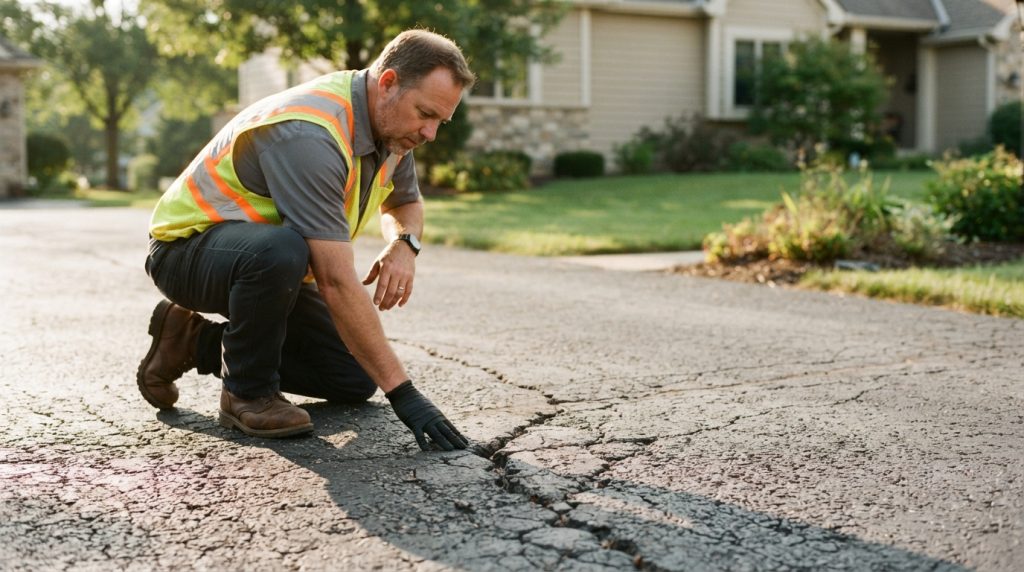
Surface-level cracks are common and often manageable, but certain patterns point to issues below the pavement.
- Alligator cracking: a web of interconnected cracks resembling reptile skin, usually caused by base failure or age-related fatigue.
- Potholes: these form when water infiltrates cracks and freeze-thaw cycles expand the damage, eventually breaking the surface apart.
- Edge crumbling: asphalt edges without enough support erode faster, especially where vehicles regularly drive near the perimeter.
- Pooling water: standing water after rain means the grade has shifted or drainage was never installed correctly.
- Sunken or heaving sections: these indicate soil movement underneath, which only a contractor can properly regrade and repair.
Any one of these conditions, left unaddressed, tends to accelerate rather than stabilize over a single season.
Why Local Climate Accelerates the Timeline
Pavement in the Upstate experiences more stress than many homeowners expect. Temperature swings between winter lows and summer highs cause asphalt to expand and contract repeatedly, and that movement is a leading cause of surface cracking over time. Research from the Federal Highway Administration notes that environmental factors such as freeze-thaw cycles and moisture directly affect how quickly pavement deteriorates, which is relevant for homeowners in Greenville, SC, where winter cold snaps can follow mild stretches within the same week.
Rainfall adds another layer of risk. Water that seeps into unsealed cracks weakens the base material, and repeated freezing can widen those cracks into potholes within a single season. A driveway that looked stable in autumn can show noticeably more damage by early spring if small cracks were never sealed.
DIY Patch vs. Professional Repair
Homeowners often start with store-bought filler before realizing the limits of a surface-only fix.
| Factor | DIY Patch Kit | Professional Repair |
|---|---|---|
| Addresses base damage | No | Yes |
| Expected durability | Months | Multiple years with proper maintenance |
| Matches existing grade/drainage | Rarely | Typically, with grading equipment |
| Best suited for | Hairline cracks, minor surface wear | Potholes, alligator cracking, sunken areas |
A patch kit can buy time on a small crack, but it does not address compaction issues or drainage problems that caused the damage in the first place.
Practical Signs It Is Time to Call a Contractor
Certain situations call for professional evaluation rather than continued monitoring.
- Cracks wider than a quarter inch or spreading across multiple sections of the driveway.
- Water that consistently pools in the same spot after every rain.
- A driveway surface that feels soft, spongy, or uneven when walked on.
- Visible separation between the driveway and garage slab or sidewalk.
- Asphalt older than fifteen to twenty years showing widespread fading and brittleness.
Any of these conditions suggests the pavement has moved past routine maintenance and into repair or replacement territory. For residents of Greenville, SC, where seasonal temperature shifts stress asphalt year-round, catching these signs early typically costs less than waiting for full-depth failure.
Frequently Asked Questions
How often should a residential driveway be inspected? A visual check twice a year, ideally before and after winter, helps catch cracking or drainage changes before they worsen.
Can sealcoating fix existing cracks? Sealcoating protects asphalt from moisture and UV exposure, but it is a preventive measure, not a repair for structural cracks or potholes.
Is patching enough, or does the whole driveway need replacing? That depends on how much of the surface is affected and whether the base layer beneath it has failed; a contractor can determine this during an on-site evaluation.
Does weather affect how quickly asphalt should be repaired? Yes. Moisture that enters cracks before a freeze can cause rapid spreading, so repairs are often recommended before winter rather than after damage sets in.
Getting a Professional Opinion on Driveway Condition
Based in Chesnee, SC, S & J Asphalt Paving serves customers across Greenville, SC, offering an identifiable point of reference for residents researching local paving options.
Additional background on driveway materials and maintenance practices is available through Visit Website, which covers general asphalt service information for the surrounding area.