In short:
- Loud noises, burning odors, no airflow, or a non-stop cycling system usually signal a problem needing same-day attention.
- A licensed technician typically diagnoses the issue on-site, explains repair options, and restores safe operation before leaving.
- Richmond, VA homeowners can reduce downtime by knowing which warning signs justify an after-hours call versus a scheduled appointment.
A heating or cooling system that stops working, emits a burning smell, or makes grinding noises usually calls for prompt professional attention rather than a wait-and-see approach. Recognizing these warning signs early helps prevent small mechanical issues from turning into costly breakdowns or safety hazards.
Calling for Emergency HVAC service becomes necessary when a system fails in a way that threatens comfort, indoor air quality, or household safety. Richmond, VA summers and winters bring temperature swings that put extra strain on aging equipment, making it worth knowing which symptoms require immediate action.
Warning Signs That Point to an Urgent Repair
Not every HVAC problem is an emergency, but certain symptoms indicate the system needs attention the same day rather than during a routine visit.
- No heating or cooling output: The unit runs but produces no warm or cool air, often pointing to a compressor, refrigerant, or electrical fault.
- Burning or chemical odors: A scorched smell from vents can indicate overheating components or wiring damage.
- Strange noises: Grinding, screeching, or banging sounds often mean a mechanical part has loosened or failed.
- Water leaking near the unit: Pooling water can signal a clogged drain line or a cracked condensate pan.
- Constant cycling or tripped breakers: A system that won’t stay running, or repeatedly trips a breaker, may have an electrical short or airflow restriction.
Routine maintenance helps reduce the odds of these failures. According to ENERGY STAR, changing the air filter every one to three months and scheduling seasonal tune-ups keeps a system running efficiently and can catch small issues before they escalate.
What Happens During an Emergency Service Call
Knowing the general process helps homeowners set realistic expectations when a system fails unexpectedly.
- Initial phone assessment: The technician or dispatcher gathers details about the symptoms, system age, and any recent changes to narrow down likely causes.
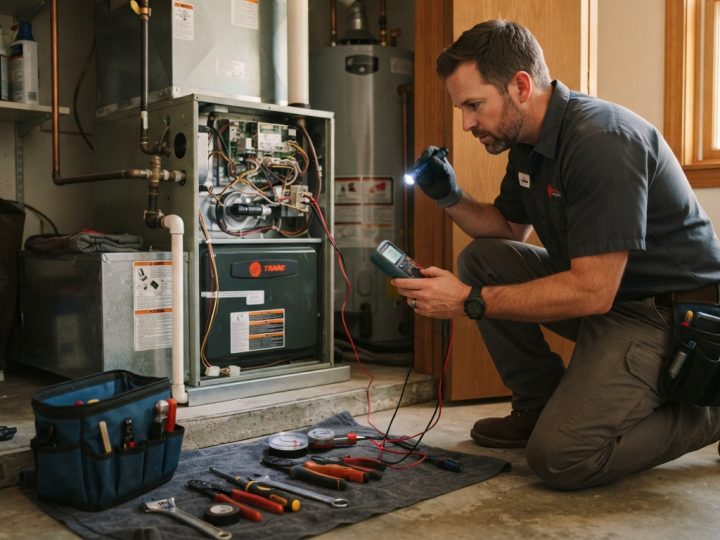
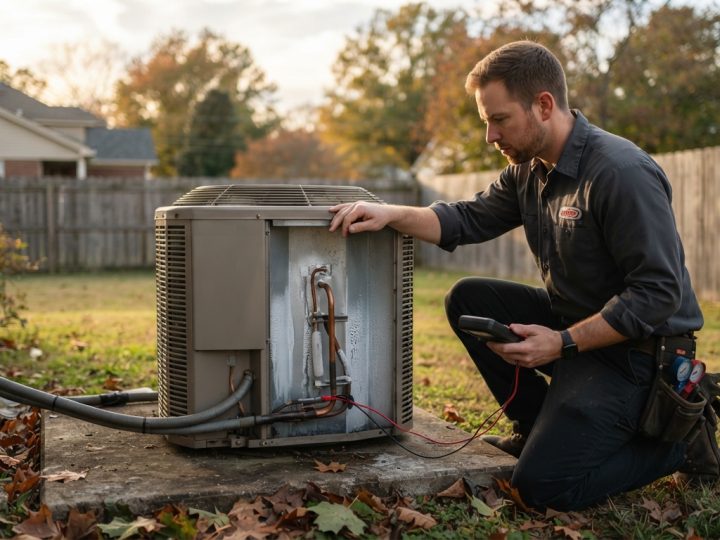
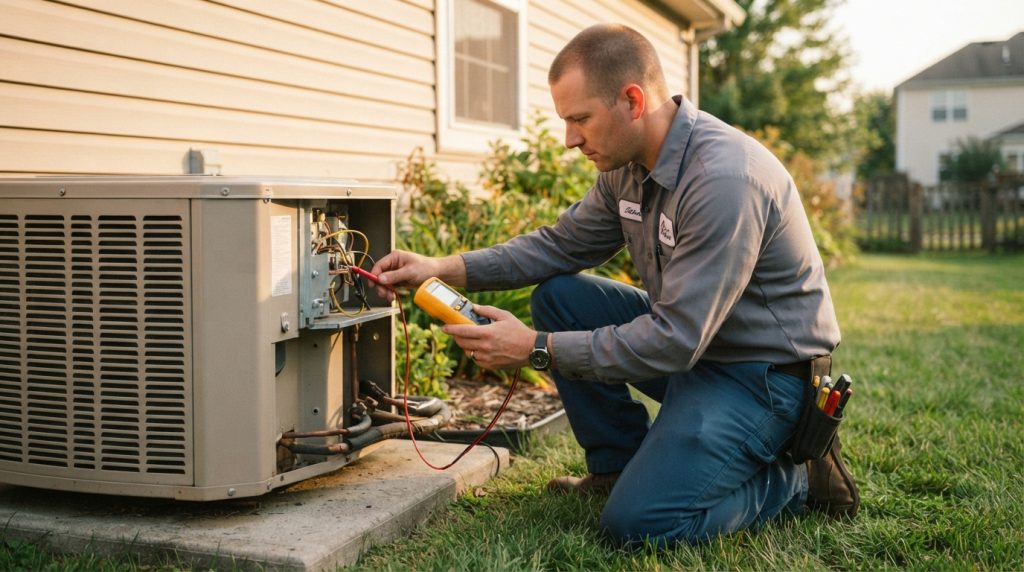
- On-site diagnosis: A technician inspects the equipment, checks electrical connections, refrigerant levels, and airflow to identify the root cause.
- Repair or temporary fix: Many issues, such as a failed capacitor or clogged drain line, can be resolved on the spot with parts carried on the service vehicle.
- Safety check and explanation: Before leaving, the technician typically explains what failed, what was repaired, and whether any further monitoring or follow-up visit is recommended.
Emergency Repair Versus Scheduled Maintenance
| Factor | Emergency Repair | Scheduled Maintenance |
| Timing | Same day or after-hours | Planned in advance |
| Typical trigger | Total system failure, odor, leak, noise | Seasonal checkup, filter change |
| Technician focus | Diagnose and stabilize the issue | Inspect, clean, and tune components |
| Cost consideration | Often higher due to urgency and parts | Lower, predictable cost |
Understanding this difference helps homeowners decide whether a symptom warrants an immediate call or can wait for a regular appointment.
Preparing Your Home Before Help Arrives
A few simple steps can make an emergency visit more efficient and safer for everyone involved.
- Turn off the system at the thermostat or breaker if a burning smell or sparking is present.
- Clear a path to the indoor unit, outdoor condenser, and electrical panel.
- Note when the problem started and any sounds, smells, or error codes observed.
- Keep pets secured away from the work area during the visit.
These precautions reduce diagnostic time and help the technician address the underlying cause more quickly once on-site.
Frequently Asked Questions
How quickly can a technician respond to a no-heat or no-cool emergency? Response times vary by provider and current demand, but many HVAC companies in the Richmond, VA area prioritize same-day dispatch for total system failures, especially during extreme weather.
Is a burning smell from the vents always an emergency? A persistent burning odor should be treated as urgent since it can indicate overheating wiring or a failing motor, both of which pose fire risks if ignored.
Can a clogged filter cause a system to shut down completely? Yes, a severely clogged filter can restrict airflow enough to trigger a safety shutoff, so checking and replacing the filter is a reasonable first step before calling for service.
Should I keep running the system if it is making a loud noise? It is generally safer to turn the unit off and schedule a diagnostic visit, since continuing to run damaged components can turn a minor repair into a major one.
Getting Help When It Matters Most
Based in Midlothian, VA, WG Speeks Heating & Air Conditioning serves customers across Richmond, VA.
Current availability details for Click Here For Emergency HVAC Service are published for the local service area.