Short version:
- Event staging covers the stage structure, audio, video, and lighting systems that shape how an audience experiences a live event.
- Planning for staging in Tulsa, OK should account for venue type, local permitting timelines, and the technical scope of the production.
- Coordinating staging early with an experienced provider reduces setup risk for corporate, community, and touring events.
Event staging refers to the design, construction, and technical integration of a stage environment, including audio, video, and lighting systems that support a live production. For organizers in Tulsa, OK planning a conference, concert, or corporate gathering, the staging phase determines whether an event looks professional and runs without technical interruption.
Professional Event Staging Services typically combine structural stage elements with the audiovisual systems that bring a program to life, rather than treating these as separate line items. This integrated approach matters because a stage platform without matched lighting and sound coverage rarely delivers the experience an audience expects. Organizers who understand this connection tend to plan budgets and timelines more realistically.
What Event Staging Actually Includes
Staging is not limited to a raised platform. A complete staging package generally addresses several interconnected systems that must be planned together rather than booked piecemeal.
- Structural elements: stage decking, risers, trussing, and backdrops sized to the venue and audience.
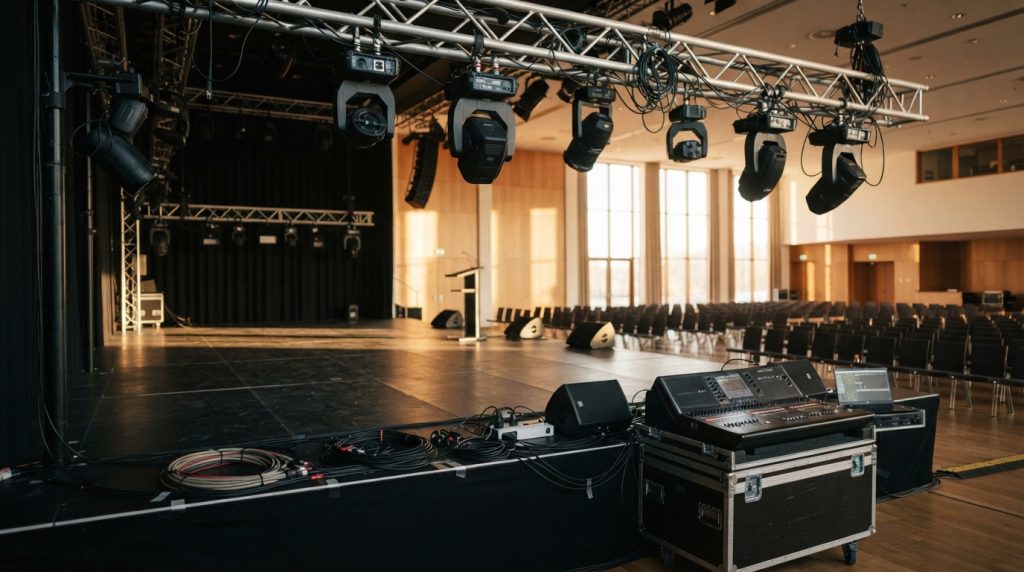
- Audio systems: wireless microphones, speaker arrays, and mixing consoles suited to room acoustics.
- Lighting design: wash lighting, moving heads, and architectural or mood lighting for the program format.
- Video support: LED walls, projection, switching, and camera coverage for larger audiences or hybrid broadcasts.
Each category affects the others. A stage built without accounting for sightlines to a projection screen, or lighting positioned without regard to camera angles, creates problems that are expensive to fix once an event is underway.
Why Staging Decisions Affect Event Outcomes
Staging choices influence more than appearance. They affect audience comprehension, safety, and how smoothly a program transitions between segments.
- Audience experience: Clear sightlines and balanced audio keep attendees engaged throughout a multi-hour program.
- Technical reliability: Properly rated power distribution and rigging reduce the risk of equipment failure mid-event.
- Schedule control: A stage built to the program’s run-of-show, with marked transitions and monitor placement, helps presenters and crews stay on time.
- Brand presentation: Backdrops, signage integration, and lighting color consistency support how an organization is perceived by its audience.
Events held in public spaces or parks also carry local regulatory requirements. Organizers planning outdoor staging in Tulsa, OK should review the City of Tulsa special event permit requirements, which outline tent permits, street closure timelines, and other conditions that affect stage placement and setup schedules.
Planning Considerations by Event Type
Not every event needs the same staging scope. Matching the right level of structure and equipment to the event format avoids both under-delivering and overspending.
| Event Type | Typical Staging Needs | Key Consideration |
| Corporate conference | Stage deck, podium lighting, basic AVL, confidence monitors | Clear audio for Q&A segments |
| Concert or festival | Trussing, line-array sound, moving-head lighting, LED walls | Weather protection and rigging load limits |
| Community or nonprofit event | Portable stage, simple lighting, PA system | Budget-conscious scaling without sacrificing clarity |
| Corporate town hall or training | Video switching, livestream support, multi-camera coverage | Reliable connectivity for remote attendees |
Organizations weighing these options should also confirm whether a venue already provides house sound or lighting, since this can reduce the staging scope needed from an outside provider.
Frequently Asked Questions
What is the difference between event staging and general AV rental? Event staging typically bundles structural stage elements with integrated audio, video, and lighting, while AV rental alone may only supply individual equipment pieces without stage construction or design.
How far in advance should staging be arranged for an outdoor event? Timelines depend on venue and permit requirements; Tulsa’s special event process for public outdoor events generally requires applications well before the event date, so early coordination with both the venue and a staging provider is advisable.
Can staging be scaled for smaller events? Yes. Staging scope ranges from a simple portable platform with basic sound to full trussing and LED video systems, depending on audience size and program complexity.
Does staging include lighting design, or is that a separate service? Lighting is typically included as part of a staging package, since stage structure, audio, and lighting are usually planned together to match sightlines and camera angles.
Final Thoughts and Next Steps
Based in Oklahoma City, OK, KRAMER PRO serves event organizers throughout Tulsa, OK, with audiovisual and staging-related work tied to its Oklahoma City operations.
Discover Event Staging Services outlines the technical scope of staging and production work.