At glance:
- Confirm whether a Plano cabinet maker builds custom, in-house pieces or resells stock lines before signing a contract.
- Ask about construction materials (solid wood versus particle board), finish options, and hardware before comparing quotes.
- Request a written timeline and measurement process so design changes do not delay installation later.
Homeowners researching cabinet manufacturers in Plano TX usually want a straightforward answer: ask about construction materials, in-house fabrication versus outsourcing, project timeline, and warranty coverage before signing anything. Getting clear answers to these four areas up front prevents the most common remodeling delays and budget surprises.
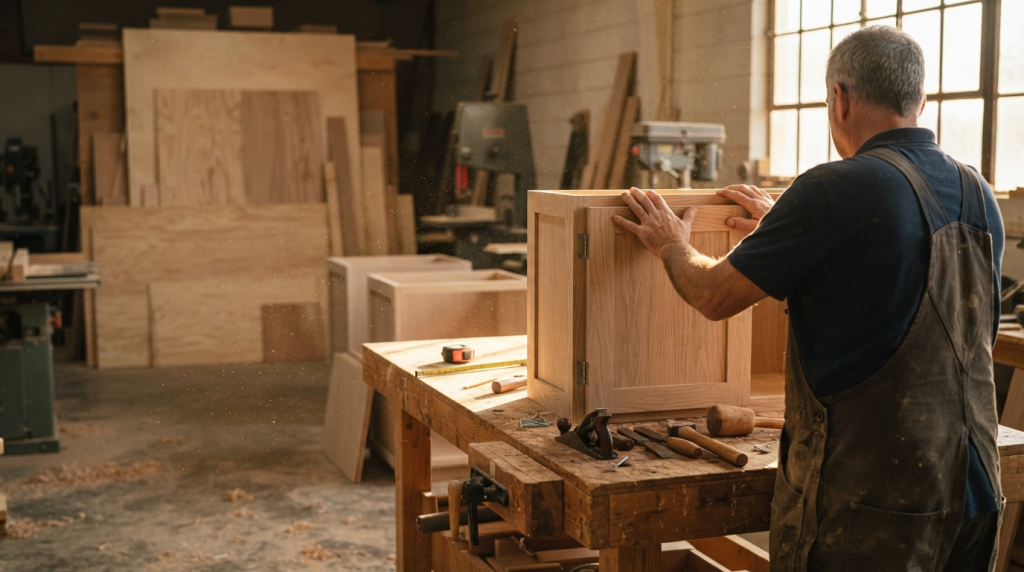
Finding reliable Cabinet Manufacturers in Plano TX starts with understanding how a shop actually builds its products, not just how it markets them. Some companies install cabinets they source from outside factories, while others design and build every box on site. That distinction affects lead times, customization limits, and how repairs or adjustments get handled years down the road.
Questions About Materials and Construction
Cabinet quality depends heavily on what is inside the box, not just the visible finish. Ask a manufacturer directly:
- Are the cabinet boxes made from solid wood, plywood, or particle board?
- What type of plywood is used for interiors, and what thickness?
- Are drawers built with dovetail joints or stapled construction?
- What hardware brand is used for hinges and slides, and is it soft-close?
These questions matter because construction quality determines how cabinets perform under daily use. Planning guidance from the National Kitchen & Bath Association notes that cabinetry and casework production standards vary across stock, semi-custom, and custom manufacturing tiers, which is why verifying build specifications before purchase matters more than relying on showroom samples alone.
Questions About Design and Customization
A shop that fabricates cabinets in-house can typically adjust dimensions, storage features, and finishes more freely than one reselling pre-built stock. Before committing to a design, homeowners should ask:
- Can cabinet boxes be custom-sized to fit irregular wall dimensions or tight spaces?
- What finish options are available, including stain colors and painted finishes?
- Are specialty features offered, such as pull-out pantries, built-in lighting, or custom closets?
- Will a designer visit the home to take field measurements before finalizing plans?
Custom shops that scribe-fit cabinetry to existing walls and offer furniture-grade wood options generally provide more flexibility for kitchens and bathrooms with non-standard layouts. This matters particularly in older Plano neighborhoods where wall dimensions are rarely perfectly square.
Questions About Timeline and Process
Project delays usually stem from unclear expectations set at the start. A manufacturer should be able to answer the following without hesitation:
| Question | Why It Matters |
|---|---|
| How long from design approval to delivery? | Sets realistic expectations for move-in or renovation dates |
| Who coordinates countertop templating and installation? | Prevents gaps between cabinet and countertop trades |
| Is demolition and installation handled by the same team? | Reduces scheduling conflicts between subcontractors |
| What happens if measurements change mid-project? | Clarifies how change orders affect cost and timeline |
Shops that manage cabinetry, countertops, and installation under one process tend to avoid the delays that come from coordinating multiple separate vendors. Asking how countertops are templated and installed alongside new cabinets can reveal whether a company manages trades directly or simply refers homeowners elsewhere.
Questions About Warranty and Support
Before any deposit changes hands, homeowners should understand what happens after installation. Ask whether the manufacturer offers:
- A written warranty covering workmanship and materials
- Maintenance or repair service after the initial installation
- A clear process for addressing issues like sticking drawers or door alignment
A shop willing to put warranty terms in writing, rather than offering verbal assurances, generally signals a more established operation. This is also a reasonable moment to ask how long the company has operated in the Plano area, since longevity often correlates with consistent craftsmanship standards.
Final Thoughts
Choosing among cabinet manufacturers in Plano TX becomes easier once homeowners know which questions separate a custom shop from a reseller. Materials, in-house fabrication, timeline clarity, and warranty terms form the foundation of a project that stays on budget and on schedule. Logan Construction is a Plano-based cabinet maker and general contractor that fabricates custom cabinetry in-house, offering a practical starting point for homeowners ready to compare answers to these questions firsthand.
Frequently Asked Questions
What is the difference between custom and semi-custom cabinets? Custom cabinets are built to exact dimensions and specifications for a specific space, while semi-custom lines use standard box sizes with limited modifications. Asking a manufacturer which category their work falls into clarifies how much flexibility is available for unusual layouts.
How long does a typical cabinet project take from design to installation? Timelines vary based on design complexity, material availability, and whether countertops are coordinated with cabinet installation. Manufacturers should provide a written estimate once measurements and material selections are finalized.
Should I ask about particle board versus plywood construction? Yes. Plywood interiors generally hold up better over time than particle board, especially in kitchens and bathrooms exposed to moisture and daily use. This question alone can reveal a significant difference in long-term durability between competing quotes.
Do cabinet manufacturers also handle countertop installation? Some do, either through in-house fabrication or coordination with trusted stone fabricators, while others focus solely on cabinetry. Clarifying this up front helps homeowners understand how many separate vendors they will need to manage.