Briefly:
- Decorative landscaping stone improves curb appeal by adding texture, color, and defined borders while reducing weekly yard maintenance.
- Stone ground cover limits weed growth, supports drainage, and holds its appearance longer than organic mulch.
- Matching stone type to slope, traffic, and bed location affects both appearance and long-term performance.
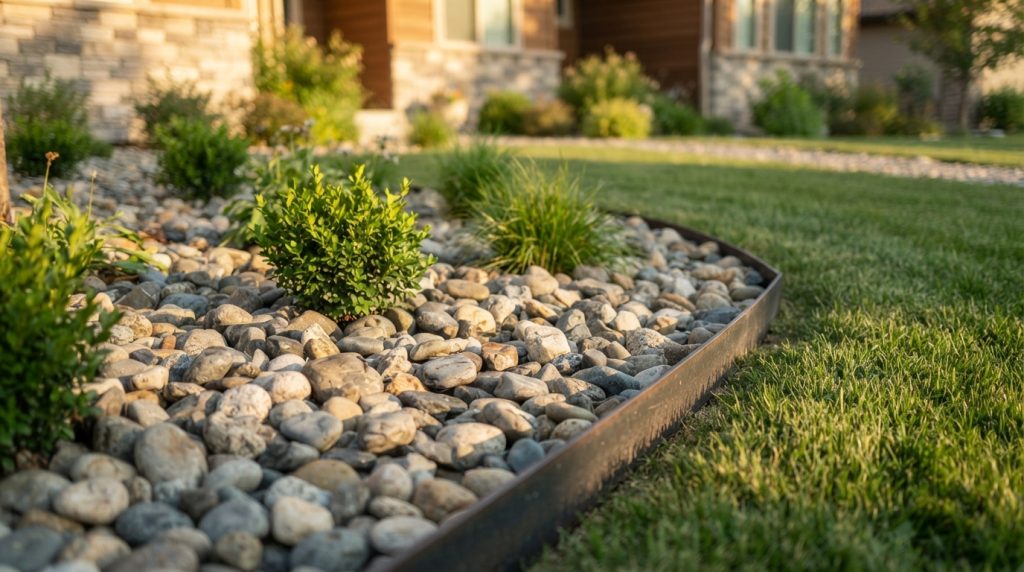
Decorative landscaping stone refers to natural or manufactured rock used as a ground cover, border material, or accent feature in outdoor spaces. It gives a yard a finished, intentional look while cutting down on routine upkeep compared to grass or mulch beds.
Homeowners in Cheshire, CT often turn to decorative landscaping stone when updating front beds, pathways, or foundation plantings because it holds color and shape across seasons without needing to be replaced every year. Unlike bark mulch, stone does not break down, so a one-time installation can remain visually consistent for years with only occasional refreshing or weed removal.
Why Stone Outperforms Mulch for Long-Term Curb Appeal
Stone and mulch serve similar purposes in a landscape bed, but they age differently over time.
- Stone does not decompose, so it will not need annual replacement like bark mulch.
- It resists compaction from foot traffic and rain, keeping beds looking tidy longer.
- It suppresses weed growth more effectively when installed over a proper barrier layer.
| Feature | Decorative Stone | Organic Mulch |
| Replacement frequency | Rarely, if installed properly | Annually or biannually |
| Weed suppression | Strong with barrier fabric | Moderate |
| Moisture retention | Lower, better drainage | Higher, retains moisture |
| Color/texture longevity | Years | One season typically |
Matching Stone Type to the Landscape Need
Not every decorative stone performs the same way in every setting. Selecting the right material depends on where it will sit and how the area is used.
- Pathways and high-traffic zones — Angular crushed stone compacts well and stays in place better than smooth, rounded stone.
- Garden beds and borders — Pea gravel or small decorative gravel works well as a low-maintenance accent around plantings.
- Slopes and drainage areas — Larger, angular stone or cobble helps slow water movement and reduce surface erosion.
- Focal points — Larger natural stone or boulders can anchor a bed visually without requiring ongoing care.
Matching material to function helps avoid common problems like stone migrating into soil or settling unevenly after heavy rain.
Local Considerations for Cheshire, CT Properties
Seasonal freeze-thaw cycles and heavy spring rain are common concerns for yards throughout Cheshire, CT, and they affect how landscaping materials perform over time. Stone placed in beds or along slopes can help manage surface water when installed with proper grading, since loose organic mulch is more prone to washing out during storms.
Connecticut’s climate also brings periods of heavy rainfall that can strain residential drainage. According to UConn Extension guidance on pesticide-free landscapes, maintaining groundcover and minimizing runoff potential are key steps in controlling erosion on managed landscapes. Stone, when paired with correct grading and a barrier layer, can support these same goals in a home landscape setting.
Homeowners planning a stone installation before winter should also consider:
- Confirming proper drainage slope away from the foundation before placing stone.
- Choosing stone size based on whether the area sees foot traffic or is purely decorative.
- Avoiding stone placement directly against tree trunks or plant crowns, which can trap moisture against bark.
Frequently Asked Questions
Does decorative landscaping stone attract or retain more heat than mulch? Stone can retain more heat during summer months than organic mulch, which is a consideration for beds located near heat-sensitive plants or close to a home’s foundation.
How often does decorative stone need to be topped off or replaced? Properly installed stone with a barrier layer typically does not need replacement, though some settling or dirt accumulation over several years may call for a light refresh.
Can decorative stone be used on a sloped yard? Yes, larger angular stone is commonly used on slopes to help slow water movement, though steep grades may require additional erosion control measures alongside the stone.
Is a fabric barrier necessary under decorative stone? A barrier layer under stone reduces the chance of stone sinking into soil and limits weed growth from beneath, making it a standard step in most installations.
Final Notes and Business Information
Based in Hamden, CT, Modern Materials Corporation serves property owners across Cheshire, CT with landscaping and recycled material supplies sourced from its Hamden, CT facility.
Current product details and service area information are available through View Modern Materials Corporation Site, which covers landscaping material availability in the region.