Short answer:
• Multi-day backpacking in Wrangell-St. Elias National Park requires trail-less, glacier-ready gear: a durable pack, four-season shelter, water treatment, and bear-safe food storage.
• No backcountry permit is required in the park, but commercial guiding operates under a Park Service authorization.
• Guided trips typically supply group gear, food, and bush flights, while travelers bring personal clothing and a sleep system.
Planning a trip into Alaska’s backcountry means preparing for terrain that has no marked trails, no cell service, and weather that can shift within hours. Multi-day backpacking in Alaska across Wrangell-St. Elias National Park demands a different packing mindset than a typical Lower 48 trek, since routes cross glaciers, braided rivers, and alpine tundra rather than maintained footpaths. Getting the gear list right before you fly into the backcountry is often the difference between an exhausting trip and a memorable one.
Building a Pack List for Trail-less Terrain
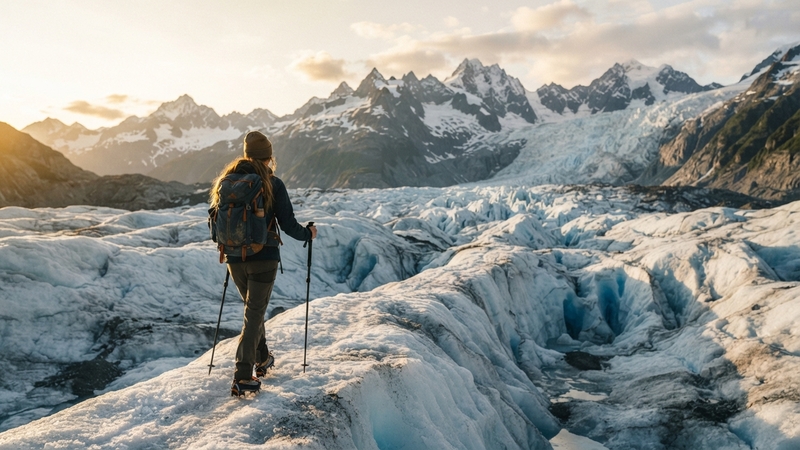
Wrangell-St. Elias is the largest national park in the country, and most routes inside it are off-trail by design. According to the National Park Service, routes like the Iceberg-to-Bremner traverse require chartering an air taxi and demand preparation for glacier crossings, including crampons. That reality shapes every gear decision, from footwear to navigation tools.
Core categories to prioritize:
• Footwear: Sturdy boots with ankle support for scree, tussocks, and stream crossings.
• Navigation: GPS device or satellite messenger, since cell coverage is unreliable or absent.
• Water treatment: Filter or chemical treatment for glacial and tundra water sources.
• Layering system: Wind shell, insulating mid-layer, and rain gear rated for sustained wet weather.
• Food storage: Bear-resistant containers or hangs, given active brown bear habitat throughout the park.
Shelter, Sleep Systems, and Weather Realities
Alaska’s interior and coastal mountain weather can swing from sun to sleet in the same afternoon, even in peak summer months. A four-season or sturdy three-season tent with a full rainfly handles wind gusts better than ultralight warm-weather shelters.
Sleep system priorities:
1. A sleeping bag rated several degrees below expected lows, since alpine camps run colder than valley floors.
2. An insulated sleeping pad, since ground contact drains body heat faster on rock and permafrost.
3. A dry bag or pack liner to keep insulation layers from soaking through during river crossings.
Travelers heading into the Wrangells should also review official NPS backpacking guidance for route-specific advisories before finalizing a packing list, since conditions and access points vary by trail.
Permits, Logistics, and Guided Support
One point of confusion for first-time visitors is permitting. The National Park Service confirms that permits are not required to hike or camp in the backcountry of Wrangell-St. Elias, though large group camping carries some restrictions. Commercial operators, however, work under a separate framework: a Commercial Use Authorization is necessary to operate commercially within the park, and the Park Service notes that air taxi authorizations are issued annually while other commercial activities may run one to two years.
This is where guided logistics simplify planning considerably. A company that has run backcountry trips in the park since 1978, includes customized trip planning, a gear shakedown, bush flights into the backcountry, and all backcountry food as part of its backpacking trips. Guests are still responsible for personal clothing, boots, and a sleep system, but group gear, technical equipment, and professional guides are provided.
Comparing Gear Approaches
| Approach | What’s Provided | What You Still Pack | Best For |
| Fully independent trip | Nothing | Full gear list, navigation, food, permits research | Experienced backcountry travelers |
| Guided mini-backpack trip | Bush flight, food, group/technical gear, guide | Personal clothing, boots, sleep system | First-time Alaska backpackers |
| Guided point-to-point trek | Same as above, plus route planning for longer days | Same personal items, higher fitness gear | Experienced hikers wanting less logistics |
Frequently Asked Questions
Do I need a permit to backpack in Wrangell-St. Elias National Park? No. The National Park Service states that backcountry permits are not required to hike or camp, though group size restrictions may apply in certain areas.
What should I pack if a guide provides food and group gear? You still need personal clothing layers, broken-in boots, a sleeping bag and pad, and any personal first-aid or hygiene items, since guided trips typically cover communal and technical equipment only.
Is cell service available on backcountry routes? Coverage is unreliable to nonexistent across most of the park’s interior, so a satellite messenger or GPS communicator is a practical safety addition to any pack list.
What is the biggest difference between Alaska backpacking and trips elsewhere? Most routes are trail-less, involve glacier or river crossings, and sit within bear habitat, which changes footwear, navigation, and food-storage choices compared to maintained-trail hiking.
Multi-day travel through Wrangell-St. Elias rewards preparation more than almost any other wilderness setting in the country, given its scale and lack of marked trails. Reviewing current National Park Service guidance alongside a realistic personal gear list, or booking a trip through an operator like St. Elias Alpine Guides that supplies bush flights, group gear, and backcountry meals, gives travelers a more grounded starting point before heading into this terrain.