• Regular grease trap cleaning prevents backups, odors, and code violations in commercial kitchens across Passaic County.
• Most food service grease traps need pumping every one to three months depending on volume and local regulations.
• Professional service includes pumping, scraping, and proper disposal of fats, oils, and grease (FOG) waste.
Grease trap cleaning in Passaic County NJ keeps commercial kitchens compliant with wastewater regulations while preventing costly clogs and backups. Restaurants, cafeterias, and food processing facilities rely on this maintenance to avoid emergency shutdowns and fines from local sewer authorities.
Grease accumulates fast in any kitchen that fries, sautes, or bakes at volume. Left unchecked, it hardens inside pipes and traps, eventually blocking wastewater flow entirely. Grease Traps Cleaning Passaic County NJ addresses this buildup before it becomes a plumbing emergency or a violation notice from the county health department.
Why Grease Traps Need Regular Attention
A grease trap separates fats, oils, and grease from wastewater before it reaches the municipal sewer system. Without consistent servicing, that separated grease layer thickens and reduces the trap’s effective capacity.
Common warning signs include:
• Slow-draining sinks or floor drains near the kitchen
• Sewage-like odors near dishwashing stations
• Gurgling sounds in floor drains
• Visible grease residue around trap lids
According to the EPA’s guidance on fats, oils, and grease, improperly managed FOG discharges are a leading cause of sanitary sewer overflows nationwide. That risk makes routine trap servicing a practical safeguard rather than an optional task.
What Professional Cleaning Involves
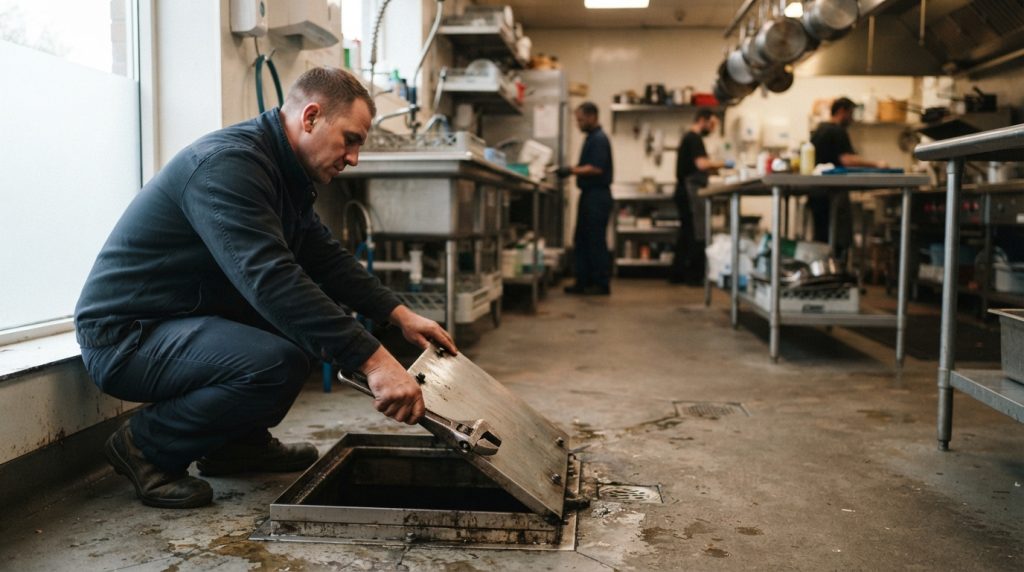
A thorough grease trap service goes beyond simply removing standing liquid. Technicians typically:
1. Pump out accumulated grease, sludge, and wastewater
2. Scrape solidified grease from trap walls and baffles
3. Inspect the trap structure for cracks, corrosion, or damaged baffles
4. Transport waste for proper disposal in accordance with state regulations
5. Document the service for compliance records
This process matters because partial cleaning, such as skimming only the top layer, leaves compacted grease that continues restricting flow. A full pump-out clears the trap to its baseline capacity.
How Often Traps Need Service
Cleaning frequency depends on kitchen volume, grease trap size, and the type of food prepared.
| Facility Type | Typical Cleaning Frequency | Key Factor |
| High-volume restaurant | Every 4-6 weeks | Fryer and grill use |
| Standard full-service restaurant | Every 1-3 months | Overall meal volume |
| Small cafe or coffee shop | Every 3-4 months | Lower grease output |
| Cafeteria or institutional kitchen | Every 1-2 months | Batch cooking cycles |
Many municipalities also require the trap to be pumped once it reaches 25 percent capacity of retained grease and solids, a standard referenced in industry plumbing codes. Facility managers should confirm exact requirements with their local sewer authority, since Passaic County municipalities can set their own thresholds.
Choosing a Qualified Service Provider
Not every plumbing outfit handles grease trap work the same way. A qualified provider should offer clear documentation, proper waste hauling credentials, and flexible scheduling that fits kitchen operating hours.
Key questions to ask before hiring:
• Does the company provide written service records for health inspections
• Are technicians equipped to handle both small under-counter traps and large in-ground interceptors
• Can service be scheduled outside peak business hours
• Is emergency or same-day service available for sudden backups
AAA Advanced Plumbing & Drain Cleaning, Inc. serves commercial kitchens throughout Passaic County with grease trap pumping and related drain maintenance. Facilities that pair routine grease trap service with periodic drain line inspections reduce the likelihood of unexpected closures during busy service periods.
Frequently Asked Questions
How do I know if my grease trap is overdue for cleaning? Slow drains, foul odors near dishwashing areas, and visible grease near the trap lid are the clearest signs. Waiting until a full blockage occurs typically means higher repair costs and possible service interruption.
Can I clean a grease trap myself? Small traps can be skimmed periodically, but full pump-outs require proper equipment and licensed waste disposal to meet local sewer regulations. Most commercial facilities rely on professional service to stay compliant.
What happens if a grease trap is neglected for too long? Grease buildup can back up into kitchen drains, trigger sewer line clogs, and lead to fines from local health or sewer authorities. In severe cases, it can force a temporary kitchen shutdown.
Does trap size affect cleaning frequency? Yes. Smaller under-counter traps generally need more frequent attention than larger in-ground interceptors, though both require scheduled servicing based on usage volume.
Consistent grease trap maintenance protects kitchen operations, sewer infrastructure, and compliance standing all at once. Facility managers in Passaic County who schedule service proactively, rather than reactively, avoid the disruption and expense that come with emergency backups. For kitchens ready to set up a maintenance schedule or address an existing grease trap issue, AAA Advanced Plumbing & Drain Cleaning, Inc. offers grease trap and septic pumping services across the county.