- Reliable extension spring suppliers follow recognized wire and dimensional standards, test for load accuracy, and document material traceability.
- Look for suppliers with decades of manufacturing history, computerized coiling equipment, and finishing processes like shot peening or heat treating.
- Tulsa buyers should confirm wire diameter range, tolerance practices, and industry experience before placing an order.
Businesses searching for a dependable extension spring supplier in Tulsa, OK need more than a vendor who can wind wire into a coil. They need a partner who verifies material specifications, holds tight dimensional tolerances, and tests every batch before it ships.
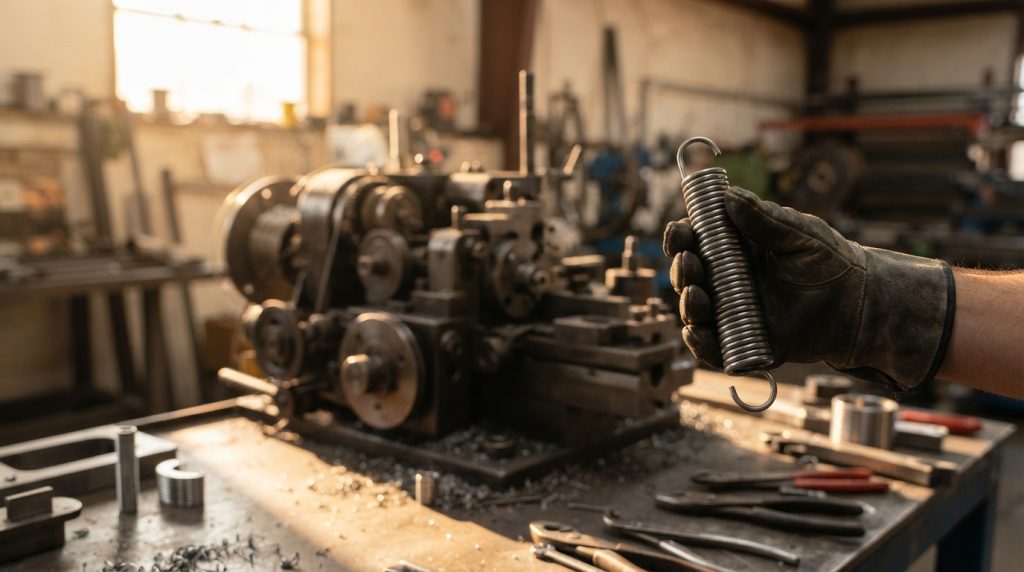
Choosing the right Extension Spring Supplier in Tulsa, OK means evaluating how a shop handles material sourcing, tolerance control, and finishing, not just how fast they can quote a price. Extension springs are tightly wound coils designed to stretch and absorb energy before returning to their original shape, and they carry real consequences when they fail in applications like garage doors or industrial machinery.
Material and Wire Standards That Matter
Spring performance starts with the wire itself. Manufacturers typically specify wire grades under recognized ASTM designations that define chemical composition, tensile strength, and surface finish for spring applications, and the ASTM International standards database maintains the current versions of these specifications used across the industry.
A quality-focused shop should be able to tell you:
- Which wire type (hard drawn, music wire, stainless, or oil tempered) fits your load and environment
- The acceptable diameter range the shop can produce
- Whether the wire meets a documented industry specification rather than an unverified source
Suppliers that cannot answer these questions clearly are a warning sign. Tolerance and consistency depend on starting with wire that meets a known standard, not a guess.
Dimensional Tolerance and Testing Practices
Tight tolerances separate a precision supplier from a generic one. Extension springs must hold consistent coil spacing, hook geometry, and overall length across an entire production run, or they will perform unpredictably once installed.
Shops that take quality seriously typically rely on:
- Computerized coiling and lathe equipment for repeatable dimensional accuracy
- Documented inspection steps before parts leave the facility
- The ability to produce regular, extended, open, or closed hook styles on request
Action Spring Company, which has operated in Tulsa since 1971, produces springs ranging from .003 inch to .500 inch in wire diameter, giving a practical sense of the size range a capable shop should handle.
Finishing Processes and Industry Experience
Finishing work often determines how long a spring lasts in the field. Processes such as heat treating, shot peening, and vibratory finishing relieve internal stress and improve surface durability, which matters for parts exposed to repeated cycling or harsh environments.
| Capability | Why It Matters | What to Verify |
| Heat treating | Relieves stress, improves fatigue life | Documented process on file |
| Shot peening | Strengthens surface against cracking | Available for applicable orders |
| Custom hook/end styles | Matches exact application needs | Range of configurations offered |
| Material traceability | Confirms wire meets spec | Supplier can cite wire standard |
A supplier serving industries such as aerospace, agriculture, construction, oil field, and electronics should be comfortable discussing how these finishing steps apply to different order types. Experience across varied sectors also signals that a shop understands how load, environment, and material interact differently depending on the end use.
Questions to Ask Before You Order
Before committing to a supplier, it helps to ask direct questions that reveal how seriously they treat quality control.
- What wire specification governs the material used in my springs
- Can you provide documentation of dimensional inspection
- What is your typical turnaround for custom extension spring orders
- Do you offer finishing processes like heat treating for my application
- How do you handle non-standard hook or end requirements
A supplier willing to answer each question specifically, rather than with vague reassurances, is more likely to deliver consistent results order after order.
Frequently Asked Questions
What makes an extension spring supplier reliable? Reliability comes down to documented material standards, consistent dimensional tolerances, and finishing processes suited to the application, backed by a track record of manufacturing experience.
Why does wire specification matter for extension springs? Wire specification determines tensile strength, surface quality, and how the spring will perform under repeated stretching, which directly affects service life and safety.
Can extension springs be customized for unusual applications? Yes. Custom hook styles, materials, and coatings can typically be produced to match specific dimensional or environmental requirements.
What industries commonly rely on custom extension springs? Aerospace, agriculture, construction, oil field, and electronics sectors frequently require custom extension springs built to precise specifications.
Quality in extension spring manufacturing is measurable through material standards, tolerance control, and finishing practices rather than marketing claims alone.
Buyers in Tulsa who ask the right questions about wire specification, inspection documentation, and process capability put themselves in a stronger position to avoid costly failures down the line. Evaluating a supplier on these concrete standards, rather than price alone, remains the most practical way to protect a project’s long-term performance.