Bottom line:
• Daily cleaning with pH-neutral soap and water prevents most surface damage on granite, marble, and quartzite.
• Sealing frequency depends on stone porosity; check annually by placing a few drops of water on the surface.
• Avoid acidic cleaners, abrasive pads, and standing liquids, which cause etching and staining over time.
Routine maintenance determines how long polished stone surfaces keep their finish and resist staining. The right daily habits, paired with periodic sealing, protect the investment in Natural Stone Countertops far more effectively than occasional deep cleaning.
Granite, marble, quartzite, and soapstone each react differently to heat, acid, and moisture, so care routines should match the specific stone type installed in a kitchen or bathroom.
Daily and Weekly Cleaning Habits
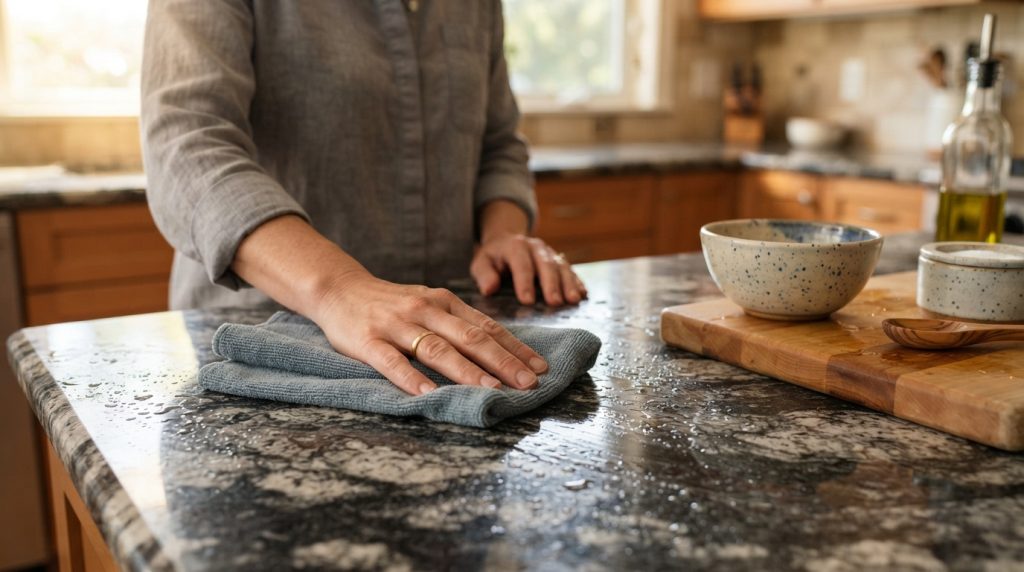
Mild soap and warm water handle most everyday spills without breaking down sealants or dulling the finish. A soft microfiber cloth works better than scrub pads, which can scratch polished surfaces over repeated use.
• Wipe spills immediately, especially wine, coffee, citrus juice, and tomato-based sauces.
• Use a stone-specific cleaner or a few drops of dish soap diluted in water.
• Dry the surface after cleaning to prevent water spots and mineral buildup.
• Avoid vinegar, bleach, ammonia, and other acidic or alkaline products on marble and limestone.
Cutting boards and trivets reduce the risk of scratches and heat marks, particularly on softer stones like marble and travertine. Even heat-resistant granite can develop thermal stress cracks when hot cookware sits directly on the surface repeatedly.
Sealing and Long-Term Protection
Sealant fills the microscopic pores in natural stone, slowing the absorption of liquids that cause staining. Porosity varies by stone type and slab, so a universal sealing schedule does not apply to every installation.
A simple water test shows whether resealing is due: drip a small amount of water onto the surface and watch how it behaves.
| Water Test Result | Stone Condition | Recommended Action |
| Water beads and sits for 15-20 minutes | Sealant intact | No action needed |
| Water darkens the stone slowly | Sealant wearing thin | Reseal within a few weeks |
| Water absorbs within 1-2 minutes | Sealant failed | Reseal promptly |
Granite often holds a seal for one to two years, while more porous stones like marble, limestone, and travertine may need resealing annually. The Marble Institute of America publishes maintenance guidance covering sealing intervals and cleaning agents suited to different stone classifications.
Common Mistakes That Shorten Countertop Life
Several habits accelerate wear on polished stone, even when cleaning routines seem thorough otherwise.
• Using glass cleaners or multi-surface sprays containing ammonia, which strip sealant over time.
• Letting acidic foods and beverages sit on marble or limestone, causing visible etch marks.
• Skipping coasters under glasses, which leads to ring stains on porous surfaces.
• Pressing too hard with abrasive sponges when removing dried residue.
• Ignoring small chips or cracks, which can widen and trap bacteria or moisture.
Humidity swings common to Lexington, KY throughout the year can also affect how quickly sealant wears, particularly in kitchens near dishwashers or sinks where moisture exposure is frequent. Checking the water-bead test seasonally helps homeowners stay ahead of resealing needs rather than reacting after staining appears.
Business Info
Based in USA, the company serves customers across Lexington, KY, offering stone countertop fabrication and related surface work.
Frequently Asked Questions
How often should natural stone countertops be sealed? Sealing frequency depends on the stone type and daily use, ranging from annually for porous stones like marble to every two years for denser granite.
Can natural stone countertops be damaged by acidic foods? Yes, acidic substances like lemon juice, vinegar, and wine can etch calcium-based stones such as marble and limestone, leaving dull spots on the polished surface.
What is the safest way to clean natural stone daily? A soft cloth with warm water and a pH-neutral soap removes most spills without stripping sealant or scratching the surface.
Do all natural stone countertops need the same care routine? No, each stone type has different porosity and hardness levels, so cleaning products and sealing schedules should be matched to the specific material installed.
Final Notes
Consistent cleaning habits and timely resealing keep natural stone surfaces performing well for years, regardless of which stone type is installed in a home. Current information about fabrication and installation services from Mees Tile & Marble is available for homeowners researching stone countertop options.

