Key point:
• A qualified fence contractor evaluates soil, property lines, and material choice before installation begins.
• Proper post depth and spacing directly affect how long a fence withstands coastal weather.
• Local permitting and HOA rules in North Charleston, SC often shape design and placement decisions.
A fence contractor determines how well a structure handles wind, moisture, and ground movement over time, making the installation process the single biggest factor in long-term durability. Choosing the right Fence Contractor affects not just appearance but how many years a fence stands without leaning, rotting, or requiring major repair.
Homeowners in North Charleston, SC often underestimate how much groundwork and planning go into a fence that lasts. A contractor’s job starts well before the first post goes into the ground, with decisions that influence structural performance for years afterward.
What a Fence Contractor Actually Does Before Installation
Before any digging starts, a contractor assesses the property for conditions that affect long-term stability.
• Checks soil composition and drainage patterns, since sandy or clay-heavy soil common in coastal South Carolina can shift posts over time
• Confirms property lines and setback requirements to avoid boundary disputes with neighbors
• Reviews local permit requirements, which vary by municipality and fence height or material
• Recommends post depth and footing type suited to the specific soil and expected wind load
Skipping these steps is one of the most common reasons fences fail early, regardless of material quality.
Material and Design Decisions That Affect Longevity
The materials selected for a fence interact directly with the local climate, and coastal humidity accelerates wear on improperly treated wood or untreated metal hardware.
| Material | Typical Lifespan | Maintenance Level | Coastal Suitability |
| Pressure-treated wood | 10-15 years | Moderate to high | Good with sealant reapplication |
| Vinyl | 20-30 years | Low | Strong resistance to moisture |
| Aluminum | 20+ years | Low | Strong resistance to salt air |
| Chain link | 15-20 years | Low | Moderate, prone to rust without coating |
A contractor matches material choice to site conditions rather than applying a one-size-fits-all approach. Fasteners and hardware also matter, since standard steel screws can corrode faster in humid environments compared to coated or stainless alternatives.
Installation Standards That Prevent Early Failure
Correct installation technique separates a fence that lasts decades from one that needs replacement within a few years.
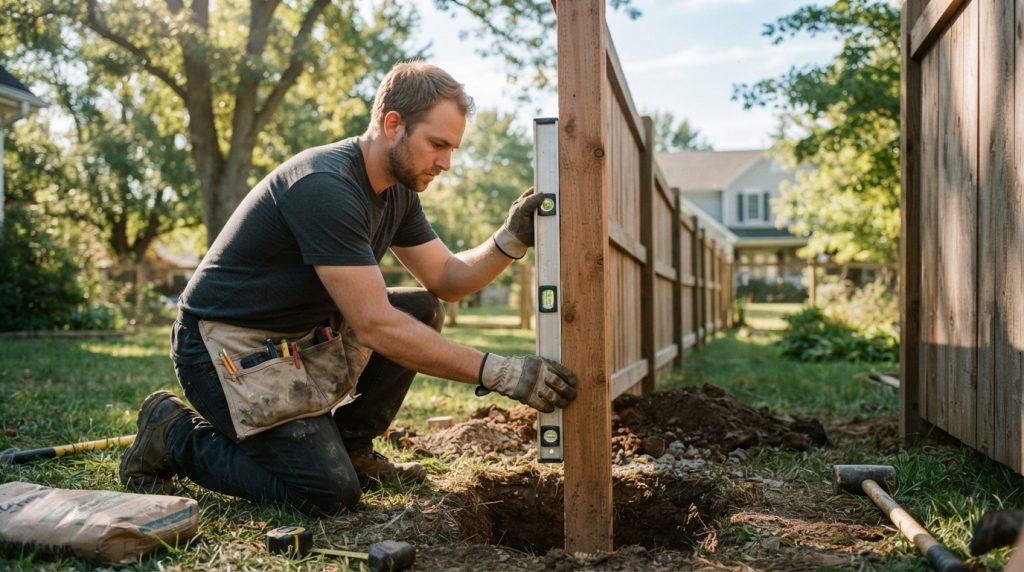
1. Post holes dug to a depth that reaches below the local frost line and accounts for soil type
2. Concrete or gravel footings mixed and set according to manufacturer specifications
3. Panels or pickets leveled and spaced consistently to handle wind loads without warping
4. Gates reinforced with hardware rated for the gate’s weight and frequency of use
The National Association of Home Builders notes that structural failures in residential outdoor installations often trace back to inadequate footing depth or poor material-to-climate matching rather than the materials themselves. This reinforces why installation method matters as much as product selection.
Permits, Regulations, and Local Considerations
Fence height limits, setback distances, and material restrictions differ across jurisdictions, and homeowners in North Charleston, SC should confirm current requirements before finalizing a design. Some neighborhoods also enforce HOA guidelines that restrict fence style or color beyond what municipal code requires. A contractor familiar with regional rules can identify these constraints early, reducing the risk of a completed fence needing modification after installation.
Frequently Asked Questions
How deep should fence posts be set for stability? Depth depends on soil type and fence height, but posts generally need to reach below the frost line with footings wide enough to resist lateral movement from wind.
Does fence material affect how often a permit is needed? Some materials and heights trigger permit requirements while others do not, so checking local rules before installation avoids delays or forced changes later.
How long does a professionally installed fence typically last? Lifespan varies by material, as shown in the comparison table above, with vinyl and aluminum generally outlasting wood and chain link when properly installed.
Service Area and Contact Information
Based in Goose Creek, SC, Patriot Fence Company LLC serves customers across North Charleston, SC, providing fencing solutions for residential properties.
Homeowners planning a fence installation or replacement project can visit patriotfencecompanyllc.com to review available services and service area details.