Briefly:
• Thermador refrigerator repairs typically range from a straightforward sensor or control board fix to more involved compressor or sealed-system work, with cost tied to the part and diagnostic time required.
• Error codes on the display panel (such as E01, E05, or E15) usually point to sensor, defrost, or water-system faults rather than a full unit replacement.
• Technicians handling refrigerant-related repairs must hold EPA Section 608 certification under federal law.
A Thermador refrigerator repair in Phoenix generally costs more than a standard appliance repair because of specialized parts and built-in diagnostic systems, with pricing shaped mainly by the specific component that has failed and whether a technician visit is needed for diagnosis. Homeowners searching for Thermador refrigerator repair are usually trying to understand whether a flashing error code or cooling problem signals a minor fix or a costlier repair. The answer almost always depends on which component triggered the fault and how early the issue was caught.
What Drives Thermador Refrigerator Repair Costs
Thermador refrigerators use electronic control boards and sensor networks that differ from basic refrigerator designs, which affects both diagnostic time and part pricing.
• Sensor and thermistor faults — Often the least expensive fix; a failed NTC thermistor reading out of range can trigger codes without stopping cooling entirely.
• Defrost system failures — Frost buildup on evaporator coils from a failed defrost heater or timer is rated as a higher-severity repair.
• Water and ice maker issues — A dripping water inlet valve or blocked drain line can cause recurring leak-related codes.
• Compressor or sealed-system problems — The most costly category, since sealed-system work requires certified refrigerant handling.
Common Error Codes and What They Signal
Thermador refrigerators display E-series codes that correspond to specific failed components rather than generic warnings. Recognizing the code pattern helps homeowners describe the problem accurately when scheduling service.
| Error Code | Likely Cause | Typical Repair Complexity |
| E01 | Refrigerator compartment sensor fault | Medium — needs technician diagnosis |
| E05 | Defrost system failure | High — affects cooling if left unresolved |
| E15 | Water leak or ice maker valve issue | Medium to high, often recurring |
| E24 | Condensation drainage blockage | Medium — drain line service |
A recurring E15 code, for instance, often traces back to a slowly leaking water inlet valve rather than a single one-time event. Codes tied to the defrost system are generally treated as more urgent because frost accumulation can eventually block airflow and stop the unit from cooling at all.
Why Certified Refrigerant Handling Matters
Any repair involving a sealed refrigeration system is governed by federal rules, not just manufacturer guidelines. Technicians who service, repair, or dispose of equipment containing regulated refrigerants must hold the credential required under EPA Section 608, which also sets recordkeeping requirements for refrigerant quantities added during service. This certification requirement exists because improper handling of refrigerant carries environmental and safety risks, so verifying a technician’s credentials before a repair is a reasonable step for homeowners.
What to Expect During a Service Visit
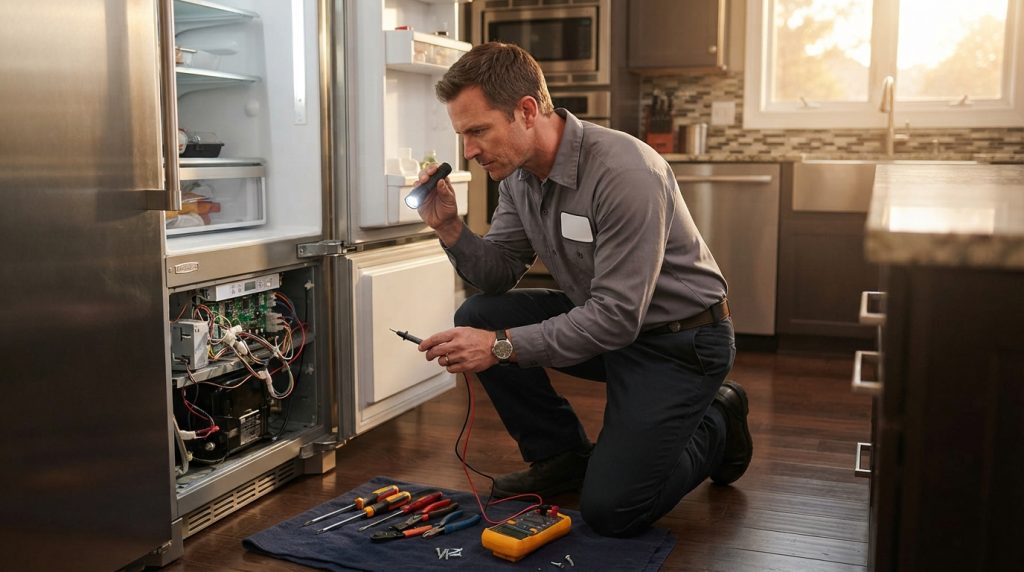
A typical Thermador refrigerator repair visit follows a predictable sequence, regardless of which component is suspected.
1. Initial diagnosis using the control panel’s error history and a physical inspection of major components.
2. Identification of the failed part, such as a sensor, defrost heater, or water valve.
3. Parts ordering if the component is not on hand, followed by a scheduled follow-up visit.
4. Repair completion and a test cycle to confirm the error code clears and cooling stabilizes.
Phoenix, AZ summers add another variable: extended high ambient temperatures can place extra strain on condenser fans and compressors, which may shorten the interval between service needs for older units. Based in USA, appliance repair providers serving this region schedule visits around that seasonal demand pattern.
Frequently Asked Questions
How much does a typical Thermador refrigerator repair cost?
Answer: Cost depends heavily on the failed component; sensor replacements are generally less expensive than defrost system or sealed-system repairs, which require more diagnostic time and specialized parts.
Can a Thermador refrigerator be reset after an error code appears?
Answer: Some codes clear with the panel’s reset button, but codes tied to a physical fault, such as a stuck float switch from a water leak, will not clear until the underlying issue is resolved.
Is it safe to ignore a flashing error code if the unit still seems to cool normally?
Answer: It is not recommended, since sensor faults and minor leaks often worsen over time and can eventually affect cooling performance or trigger more serious component failures.
Do all refrigerator repairs require EPA certification?
Answer: Only repairs involving the sealed refrigerant system require EPA Section 608 certification; sensor, control board, and water line repairs do not involve refrigerant handling.
Business Info
Lux Appliance Care is an appliance repair provider based in USA that serves customers across Phoenix, AZ, with technicians trained on high-end refrigerator brands.
A Note on Scheduling Service
Published contact details for Lux Appliance Care cover the Phoenix, AZ service area for appointment scheduling.
Thermador refrigerator repairs vary widely in scope, from a simple sensor replacement to sealed-system work requiring certified handling, and the error code displayed on the panel is usually the most reliable first clue to what a repair will involve. Reading that code correctly, understanding which components it points to, and confirming a technician’s certification status can help homeowners set realistic expectations before a service visit begins.