Summary:
- Slow speeds, frequent outages, and visible cable damage often signal that structured cabling needs professional attention.
- A qualified network cabling contractor diagnoses wiring issues, tests cable performance, and installs systems that meet current data demands.
- Outdated or improperly installed cabling can affect reliability, safety, and a network’s ability to scale as equipment needs grow.
Frequent network drops, unexplained slowdowns, and visible wiring damage are clear indicators that a facility’s cabling infrastructure needs professional evaluation, not a temporary fix.
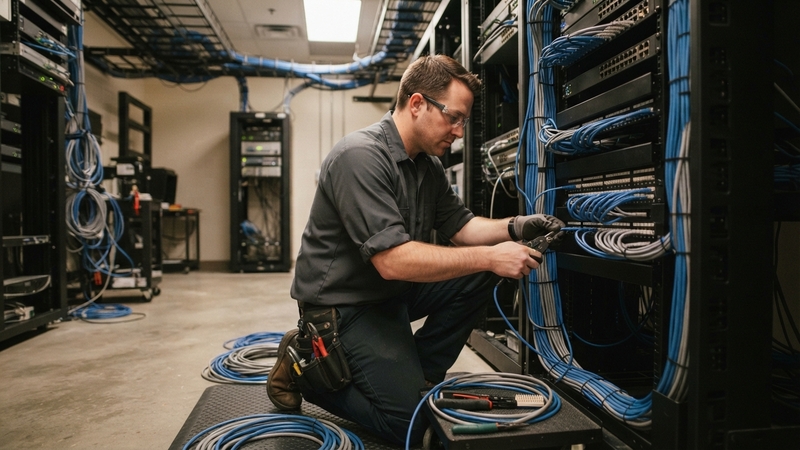
Businesses and property managers often notice these problems gradually, making it easy to dismiss them as isolated incidents rather than signs of a larger structural issue. A network cabling contractor evaluates the physical wiring behind a network, including cable types, termination points, and pathway conditions, to determine whether the existing infrastructure can still support current demand. Addressing these problems early typically costs less than waiting for a full outage to force the issue.
Common Warning Signs in a Network’s Physical Infrastructure
Several physical and performance symptoms tend to appear before a network failure becomes obvious.
- Intermittent connectivity drops that do not correlate with internet service provider outages
- Visible fraying, kinks, or exposed wiring along cable runs
- Inconsistent speeds between different areas of the same building
- Overheating network closets or equipment racks
- Cables that were never labeled or documented during a prior installation
Any one of these signs on its own may not indicate a serious problem. Still, multiple symptoms appearing together usually point to cabling that has aged past its reliable service life or was installed without following structured cabling standards.
Why Cabling Standards Matter for Performance and Safety
Structured cabling follows recognized industry standards designed to support consistent data transmission and reduce fire or safety hazards from improper wiring. The Telecommunications Industry Association maintains cabling standards referenced across commercial construction and IT infrastructure projects in the United States. Cabling that does not meet these specifications can create bottlenecks even when network hardware itself is modern and properly configured.
Older buildings in particular may have cabling installed for equipment and bandwidth needs from years earlier. As more devices connect to a single network, including security cameras, access control systems, and VoIP phones, undersized or outdated cabling becomes a limiting factor rather than a temporary inconvenience.
When to Call a Professional Versus Attempting a Fix
Not every connectivity issue requires a full rewiring project, but certain situations call for professional diagnosis rather than trial-and-error troubleshooting.
| Situation | DIY Troubleshooting | Professional Contractor Needed |
| Single device losing connection | Often sufficient | Not usually required |
| Multiple areas with inconsistent speeds | Limited effectiveness | Recommended |
| Unlabeled or undocumented cable runs | Not practical | Recommended |
| Network expansion or new equipment | Not sufficient | Required |
| Visible cable damage or exposed wiring | Not safe to attempt | Required |
Properties across Fort Myers, FL face specific infrastructure considerations, including humidity exposure and older commercial building stock, that can accelerate cable degradation compared to newer construction. A contractor familiar with structured cabling design can assess whether existing pathways, conduit, and termination hardware still meet current equipment needs.
What a Structured Cabling Evaluation Typically Involves
A thorough cabling assessment generally covers several steps before any work begins.
- Visual inspection of existing cable runs, racks, and termination points
- Performance testing to identify bottlenecks or signal loss
- Review of current and anticipated equipment needs, including data and voice systems
- Documentation of pathway conditions, including conduit and labeling gaps
- A written recommendation outlining necessary repairs or a full re-cabling scope
This process distinguishes a professional evaluation from a basic repair call, since it accounts for how the network is likely to grow rather than only fixing the immediate complaint.
Based in the USA, we provide infrastructure support to customers across Fort Myers, FL who need structured cabling assessed or installed to current standards.
Frequently Asked Questions
How often should commercial cabling be inspected? Most facilities benefit from a cabling review every few years, or sooner if new equipment, renovations, or recurring connectivity issues arise.
Can old cabling be reused when upgrading network equipment? It depends on the cable category and condition; cabling rated below current standards often cannot support higher-speed equipment without replacement.
Do any safety codes regulate cabling work? Yes, cabling installation intersects with electrical and fire safety codes, which is one reason improperly run cable poses more than just a performance risk.
What is the difference between a cabling contractor and a general IT provider? A cabling contractor focuses on the physical infrastructure, including wiring, pathways, and termination, while broader IT providers typically manage software, networking configuration, and ongoing support.
Next Steps for Addressing Cabling Concerns
Current service area information for CommX Networks is available for property owners evaluating structured cabling needs.

