The gist:
• No mess hardwood floor refinishing uses a wet preparation process instead of drum sanding, which limits airborne dust during the project.
• The approach typically restores worn hardwood in about one day, with multiple sealer coats and a finish choice such as matte, satin, semi-gloss, or gloss.
• It suits floors with surface wear, dullness, or light scratches rather than floors with deep gouges or structural damage.
Homeowners searching for a faster, cleaner way to restore worn hardwood often want one thing: a finished floor without the dust cloud that traditional sanding leaves behind. No Mess Hardwood Floor Refinishing addresses that concern directly by replacing drum sanding with a wet preparation method, which limits the fine particulate that settles into furniture, vents, and air ducts during conventional refinishing jobs.
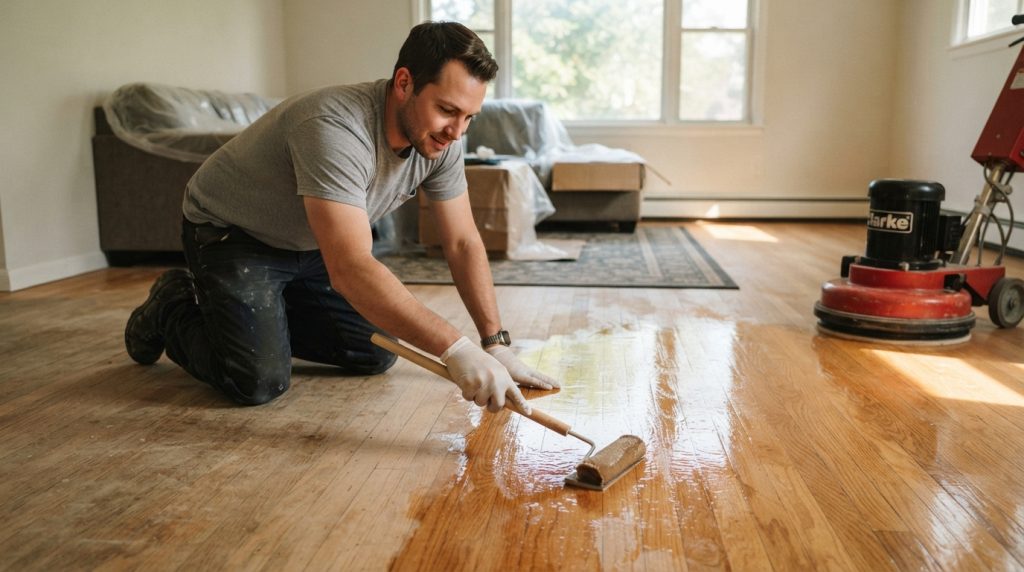
Traditional floor sanding grinds away the top layer of wood with abrasive equipment, a process that restores the appearance of worn wood floors without traditional drum sanding. In the sandless alternative, technicians use wet solutions and a high-speed machine to prepare the floor, details problem areas, and then applies multiple coats of commercial-grade sealer and your selected finish. The result is a refinished surface completed with notably less airborne debris than conventional methods produce.
How the No-Sanding Process Works
The refinishing sequence follows a defined order, starting with surface preparation and ending with a protective topcoat.
1. Wet solution application loosens the existing finish without grinding the wood itself.
2. A high-speed buffing machine works the solution into the surface to prepare it for new coatings.
3. Technicians detail problem areas such as scuffs or worn patches by hand.
4. Multiple coats of commercial-grade sealer are applied for durability.
5. A final finish is chosen from matte, satin, semi-gloss, or gloss options.
This sequence means most services are completed in one day with no sanding dust and minimal disruption. For households in Albemarle County, VA, that timeline matters when furniture needs to stay in place or when a family cannot relocate for several days during a remodel.
Why Dust Reduction Matters for Local Homes
Conventional sanding disturbs more than the floor surface. Traditional floor sanding can create airborne wood dust, and limiting dust and following appropriate work practices can help reduce exposure and disruption during floor refinishing. That distinction carries particular weight in older homes throughout Albemarle County, VA, where layered finishes and vintage flooring are common.
A low-dust approach also supports better indoor air quality during the project itself, an issue the environmental protection agency tracks as part of its broader indoor air quality guidance for homeowners. Reducing airborne particulate during a renovation project is one practical way to limit short-term exposure for residents who remain in the home while work is underway.
Is Sandless Refinishing Right for Every Floor
Not every hardwood floor qualifies for the sandless method, and understanding the limits helps set realistic expectations before scheduling an inspection.
| Floor Condition | Sandless Refinishing Fit |
| Surface wear, dullness, light scratches | Well suited |
| Discoloration from sunlight or age | Well suited |
| Deep gouges or structural damage | May require repair or different method |
| Loose or damaged boards | Needs separate repair first |
Sandless refinishing is designed for floors with surface wear, dullness, discoloration, and light scratches, while floors with severe damage, deep gouges, loose boards, or major structural problems may require repairs or a different refinishing method. A professional can inspect the floor and recommend the appropriate service before any work begins, which helps homeowners avoid paying for a process that will not address the underlying issue.
Frequently Asked Questions
Does sandless refinishing really produce less dust than traditional sanding? Yes. The wet preparation method eliminates the airborne dust created by traditional sanding methods because it does not rely on abrasive grinding equipment.
How long does the process typically take? Most projects are completed in just one day depending on the size and condition of your floors.
What finish options are available after refinishing? Homeowners typically choose from matte, satin, semi-gloss, or gloss finishes once the sealer coats are applied.
Can every type of hardwood damage be fixed this way? No. Floors with deep gouges, loose boards, or structural issues often need repair work or an alternative method before any refinishing can proceed.
Local Service Details
Based in Charlottesville, VA, Mr. Sandless of Central Virginia serves customers across Albemarle County, VA.
Readers evaluating hardwood restoration options can Visit Mr. Sandless of Central Virginia site for published service and project details.