Short version:
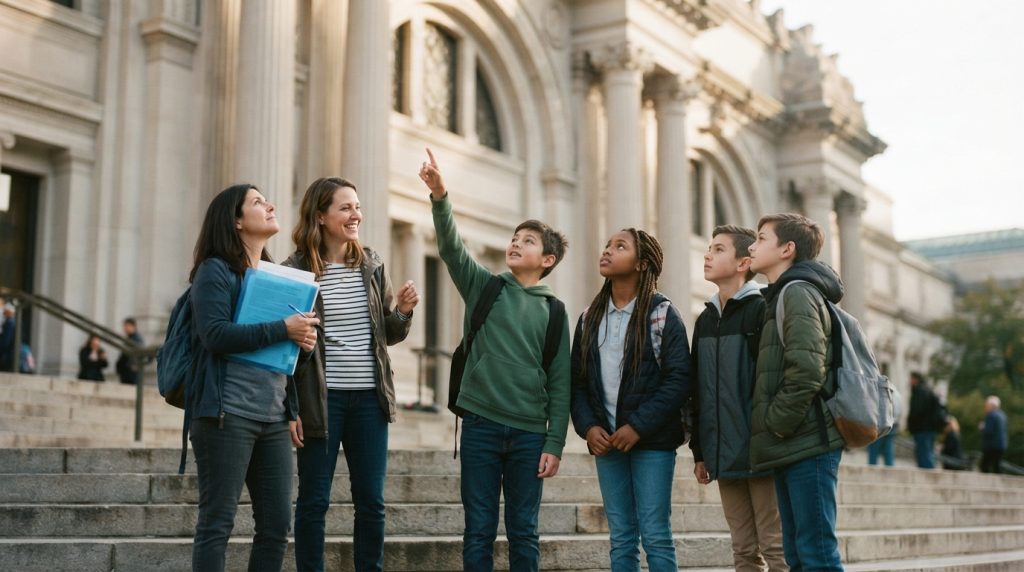
• Structured student travel connects classroom lessons to real-world settings, which supports retention and engagement.
• Group tours build teamwork, independence, and cultural awareness alongside academic content.
• Planning, supervision, and curriculum alignment determine how much academic value a trip actually delivers.
Student tours give young people a chance to apply classroom concepts in real settings, which research on experiential learning links to stronger retention and engagement than lecture-based instruction alone. The academic value depends heavily on how a trip is planned, supervised, and tied to curriculum goals.
Educational Student Tours by EPT are designed around that connection between travel and coursework, pairing destinations with subject matter so students are not just sightseeing but actively applying what they study in class. This approach reflects a broader pattern in education: when students encounter history, science, or civics in a physical location, the experience tends to stick longer than a textbook chapter. Group travel also introduces students to schedules, teamwork, and problem-solving outside a controlled classroom environment.
How Field-Based Learning Supports Retention
Cognitive research on learning environments consistently points to the same idea: context matters. Students who engage with material in a real-world setting often recall details more easily than those who only read about it.
• Multi-sensory exposure (sight, sound, movement) reinforces memory formation.
• Physical presence at a historic site, museum, or performance venue adds context that a photo in a textbook cannot replicate.
• Group discussion during and after a tour helps students process and articulate what they observed.
The National Education Association has noted that experiential approaches, including field-based learning, can strengthen student engagement when tied to clear learning objectives rather than treated as a day off from class.
Skills Developed Beyond the Classroom
Academic growth from student tours is not limited to subject-matter recall. Group trips place students in situations that require independence and cooperation, which are harder to teach through worksheets or lectures.
1. Time management: Students follow itineraries, meet departure times, and manage personal belongings.
2. Social skills: Shared meals, group activities, and new environments require communication with peers and chaperones.
3. Cultural awareness: Exposure to unfamiliar settings, whether a state capitol, a science center, or a performance hall, broadens perspective beyond a home community.
4. Confidence: Navigating a new environment, even briefly, builds a sense of capability that can carry into academic settings.
These outcomes matter for comprehensive student development, not only test scores, and they are frequently cited by educators as a reason to keep travel programs in school calendars despite budget pressures.
What Separates a Strong Program From a Weak One
Not every trip delivers academic value. The difference usually comes down to planning and structure rather than destination alone.
|
Factor |
Strong Program |
Weak Program |
|
Curriculum link |
Tied to specific lessons or standards |
Generic sightseeing with no follow-up |
|
Supervision |
Clear chaperone ratios and safety protocols |
Loosely defined oversight |
|
Pre/post activities |
Preparation materials and debrief discussions |
No classroom connection before or after |
|
Logistics |
Confirmed transportation, lodging, and scheduling |
Last-minute or unclear arrangements |
Schools and tour organizers across the USA generally evaluate these factors before committing to a program, since logistics and safety planning directly affect whether a trip can proceed smoothly and meet its academic goals.
Frequently Asked Questions
Do student tours need to align with a specific subject? Alignment is not mandatory, but trips tied to coursework, such as a history class visiting a historic site, tend to produce clearer academic benefits than unrelated outings.
How long should an educational tour last to be effective? Length varies by grade level and goals; a single-day trip can reinforce one lesson, while multi-day programs allow deeper exploration of broader themes.
Are student tours only for history or science classes? No. Performance groups, civics classes, and arts programs also use structured travel to apply skills in real venues, such as competitions or performance halls.
Who typically organizes logistics for school trips? Logistics are usually handled jointly by school staff and a tour provider, covering transportation, lodging, scheduling, and safety planning.
Help students turn classroom lessons into meaningful real-world experiences with educational tours planned around learning, exploration, and group engagement. Educational Performance Tours offers student travel programs that give schools opportunities to connect academic subjects and performing arts with destinations and experiences beyond the classroom. Whether you’re planning a history-focused trip, an arts tour, or a group educational experience, contact Educational Performance Tours to discuss your students’ goals and travel requirements. Visit Educational Performance Tours on Google Maps for business details and contact information.