Choosing the best car detailing equipment for sale starts with matching machine specifications, such as pressure washer PSI and water flow, to the type of vehicles and surfaces being cleaned. A detailing setup built around the wrong equipment class often leads to inconsistent results, slower service times, or premature part failure.
Shopping for the best car detailing equipment for sale means comparing pressure washers, surface cleaners, extraction tools, and chemical supplies against how often they will be used and under what conditions. Buyers across the USA who are building a mobile or shop-based detailing operation generally need to weigh durability against upfront cost before committing to a full equipment lineup.
What Core Equipment a Detailing Setup Needs
A functional detailing operation typically relies on a short list of interdependent tools rather than a single machine. Missing even one piece can slow down a job or compromise the finish.
• Pressure washer rated for vehicle-safe PSI and consistent flow
• Portable water tank and pump for mobile setups without a hose bib
• Surface cleaner attachments for flat panels and wheel wells
• Extraction or wet/dry vacuum for interior cleaning
• Car wash soaps, degreasers, and wax or ceramic coating products
• Microfiber towels, applicators, and brushes rated for paint-safe use
To launch a mobile detailing business, a pressure washer rated around 1,800 to 2,500 PSI for vehicles, a portable water tank, a generator, and car wash soaps are generally needed. Equipment selected below that range may struggle with stubborn grime, while units rated well above it increase the risk of paint or trim damage if not handled carefully.
Matching PSI and Flow to the Job
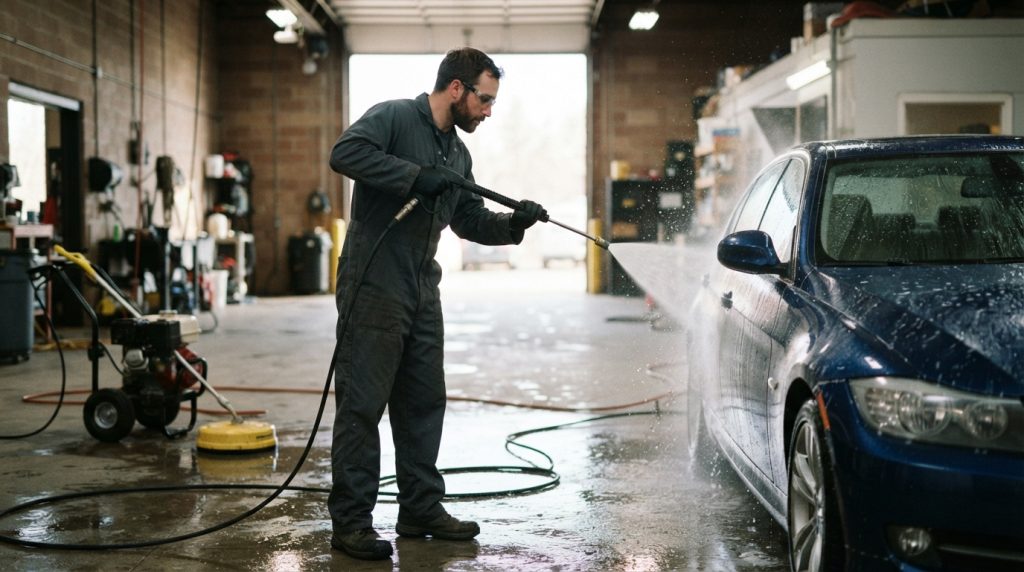
Pressure washer selection is often the single most consequential decision in a detailing equipment lineup. Too much pressure risks stripping wax, damaging trim, or forcing water past seals; too little extends job time and wastes water.
|
PSI Range |
Typical Use |
Consideration |
|
1,200-1,800 |
Light rinsing, interiors, soft surfaces |
Lower risk of surface damage |
|
1,800-2,500 |
Standard vehicle exterior detailing |
Balanced pressure and flow for most jobs |
|
2,500-3,200 |
Heavy-duty wheels, undercarriage, commercial lots |
Requires trained operators and added PPE |
|
3,200+ |
Industrial or fleet-scale cleaning |
Falls under stricter OSHA equipment classification |
Operators working above 3,200 PSI fall under additional regulatory expectations. Equipment rated above 3200 psi must stay compliant with OSHA class #3 requirements, which call for a 24-inch hose guard near the operator as well as a 48-inch lance.
Safety Equipment and Maintenance Considerations
Detailing equipment is exposed to moisture, chemicals, heat, and frequent transport, all of which accelerate wear on seals, hoses, and electrical components. Since equipment is frequently exposed to moisture, chemicals, heat, dust, vibration, and frequent transport, the components must be suited to those conditions.
Personal protective equipment is not optional for anyone operating pressure washing tools regularly. OSHA requires employers to provide appropriate personal protective equipment whenever workplace hazards cannot be eliminated through engineering or administrative controls, including gloves, respirators, boots, and safety glasses. For higher-pressure work, the OSHA-recommended safety gear guidance outlines when face shields and additional protection become necessary.
Routine maintenance planning also matters for uptime. Keeping essential backups on hand can prevent a small equipment issue from disrupting an entire day of appointments. Frequently used tools should stay accessible, while specialty attachments can be stored separately until a specific job calls for them.
Frequently Asked Questions
What PSI pressure washer is safest for washing cars? Most detailing operations use pressure washers in the 1,800 to 2,500 PSI range for vehicle exteriors, which balances cleaning power with a lower risk of paint or trim damage compared to higher-pressure industrial units.
Is commercial-grade equipment necessary for a new detailing business? Equipment built for repeated professional use tends to hold up better under daily exposure to chemicals, heat, and moisture than consumer-grade alternatives, which can shorten the useful life of a new operation’s core tools.
What should be checked before buying detailing equipment? Buyers generally benefit from confirming that equipment is rated for repeated commercial use, suited to the chemicals and conditions it will face, and compatible with the rest of the existing setup before purchase.
Does detailing equipment require specific safety gear? Yes, pressure washing tasks call for eye protection, gloves, and hearing protection at minimum, with additional gear required as pressure levels and chemical use increase.
Product listings maintained by suppliers such as Blast-Off Equipment typically detail specifications like PSI, flow rate, and compatible attachments, which buyers can use to compare options before purchase.
Catalog details for Blast-Off Equipment are published for buyers researching available pressure washing and detailing equipment models.