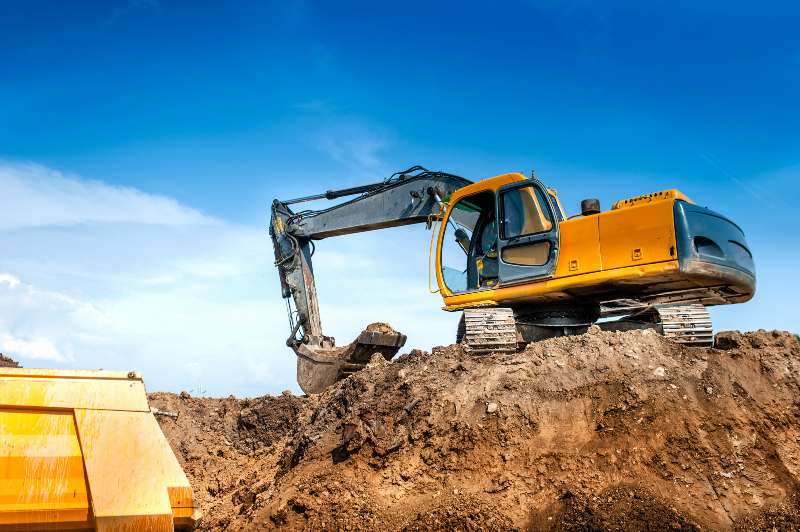
A construction excavation company prepares raw or existing land for building by clearing vegetation, grading the surface, and digging or removing soil to the depth and shape a project requires. This groundwork determines whether a foundation, driveway, or utility line performs correctly for years rather than settling, cracking, or flooding.
Site preparation is often the least visible part of a construction project, yet it carries some of the highest stakes. A Construction Excavation Company typically handles land clearing, grading, trenching, and demolition work that has to happen before concrete trucks or framing crews ever arrive. Skipping or rushing this stage is a common reason structures develop drainage issues or uneven settling within the first few years.
Rusty Crain Concrete & Excavation, based on its Google Business Profile, lists excavation, land clearing, grading, Bobcat work, concrete removal, and demolition among its services for residential, commercial, and ranch properties. Based in USA, the business serves customers across Bertram, TX, along with other parts of Central Texas.
Core Services Involved in Site Preparation
Excavation work covers several distinct tasks that typically happen in sequence before any concrete or structural work begins.
• Land clearing removes trees, brush, stumps, and debris so equipment can access the build site.
• Grading levels or slopes the ground to control water runoff and create a stable base.
• Trenching cuts narrow channels for utility lines, drainage pipes, or septic systems.
• Demolition and concrete removal take out old structures, slabs, or driveways before new construction starts.
• Bobcat and dirt work move soil, gravel, or fill material around smaller or tighter job sites.
Each step affects the ones that follow. Poor grading, for example, can undermine a foundation even if the concrete work itself is done well.
Why Proper Excavation Reduces Long-Term Risk
Soil behaves unpredictably once it is disturbed, and depth changes the level of risk involved. According to OSHA’s trenching and excavation safety guidance, trench walls must be sloped, shored, or shielded to prevent collapse, since cave-ins pose the greatest risk to worker safety on excavation sites.
For property owners, the practical concern is usually less about collapse and more about long-term performance:
|
Issue if Skipped |
Likely Result |
|
No grading for drainage |
Water pooling near foundation, erosion |
|
Inadequate soil compaction |
Settling, cracked slabs or driveways |
|
Unmarked utility lines |
Service disruptions, repair delays |
|
No site survey before digging |
Uneven excavation depth, added cost |
Bertram, TX sits in an area where clay-heavy soils are common across Central Texas, and these soils expand and contract with moisture changes. That shift is part of why grading and compaction are treated as necessary steps rather than optional ones before a foundation or driveway goes in.
What to Expect During a Typical Project
A straightforward excavation project generally follows a consistent order, though timelines vary by scope and soil conditions.
1. Site assessment to check soil type, slope, and existing utilities.
2. Land clearing and removal of vegetation or old structures.
3. Rough grading to establish the overall shape of the site.
4. Trenching for utilities, if the project requires underground lines.
5. Final grading and compaction before concrete or foundation work begins.
Weather plays a role in scheduling, since heavy rain can delay grading or make soil too unstable to compact properly. Property owners planning a project in Bertram, TX may want to build in extra time during wetter months for this reason.
Frequently Asked Questions
How long does land clearing and grading usually take? Timelines depend on lot size, vegetation density, and soil conditions, so a small residential lot moves faster than a larger commercial or ranch site.
Does excavation work require permits? Many grading, demolition, and utility trenching projects require local permits, and requirements vary by property type and project scope, so checking with local authorities before work begins is advisable.
What is the difference between grading and excavation? Excavation refers broadly to removing or moving earth, while grading specifically refers to shaping and leveling the ground surface, often for drainage control.
Can excavation work be combined with concrete services? Site preparation and concrete work are often sequenced together on the same project, since grading and compaction directly affect how a slab or foundation performs afterward.
Excavation sets the physical foundation, often literally, for everything built afterward, which makes it a part of construction that is worth understanding even for property owners who will not do the digging themselves. Current service area details for Rusty Crain Concrete & Excavation are available for review ahead of a planned project.