Recap:
• A warm fridge or noisy compressor usually signals a fixable mechanical or electrical issue, not an automatic replacement.
• Trained technicians diagnose common failure points like seals, condenser coils, and thermostats before recommending repair or replacement.
• Addressing problems early helps prevent food spoilage and reduces strain on the appliance’s remaining components.
A refrigerator that runs warm, cycles constantly, or leaks water is rarely a sign the unit is finished. In most cases, professional Refrigerator Repair in Kansas City MO can identify the specific component causing the problem and restore normal cooling without the cost of a full replacement.
Homeowners searching for repair help are typically dealing with one of a few recurring issues: inconsistent temperatures, unusual noises, frost buildup, or a unit that has stopped cooling altogether. Visit Website to see the range of appliance services available in the Kansas City area, including diagnostic and repair work on refrigerators experiencing these symptoms. Knowing what typically causes these failures can help homeowners decide how urgently they need a technician.
Common Refrigerator Problems That Call for Repair
Refrigerators are built with several interdependent systems, and a failure in one part often shows up as a symptom somewhere else. Recognizing the pattern of a problem can help narrow down the likely cause before a technician arrives.
• Warm interior despite running compressor — often linked to a failing condenser fan, dirty coils, or a malfunctioning thermostat.
• Water pooling under the unit — commonly traced to a clogged or frozen defrost drain.
• Loud buzzing or clicking sounds — frequently caused by a struggling compressor or worn evaporator fan motor.
• Frost buildup in the freezer — usually points to a door seal that no longer closes tightly or a defrost system that is not cycling properly.
Each of these issues has a distinct repair path, which is why accurate diagnosis matters more than guessing at a fix.
What Professional Diagnostic Work Involves
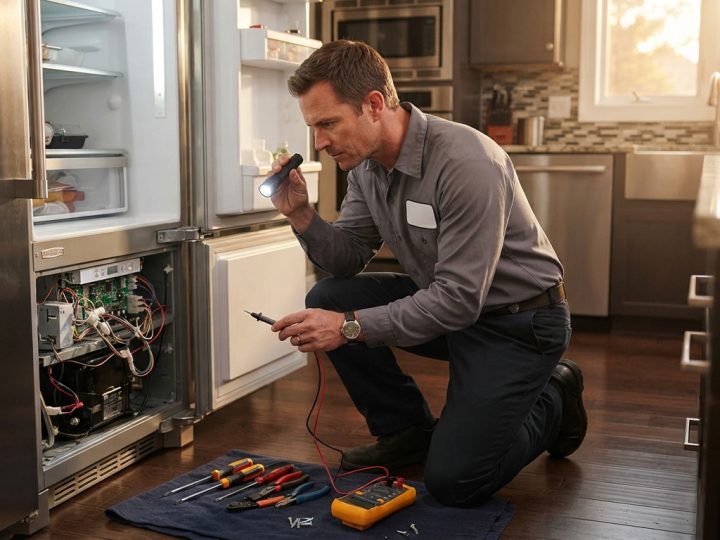
A proper repair visit starts with isolating the actual source of the malfunction rather than replacing parts at random. Technicians typically check electrical components, airflow, and seals in a structured sequence to avoid unnecessary part replacement.
1. Testing the thermostat and temperature control board for accurate readings.
2. Inspecting door gaskets for gaps, tears, or warping that let cold air escape.
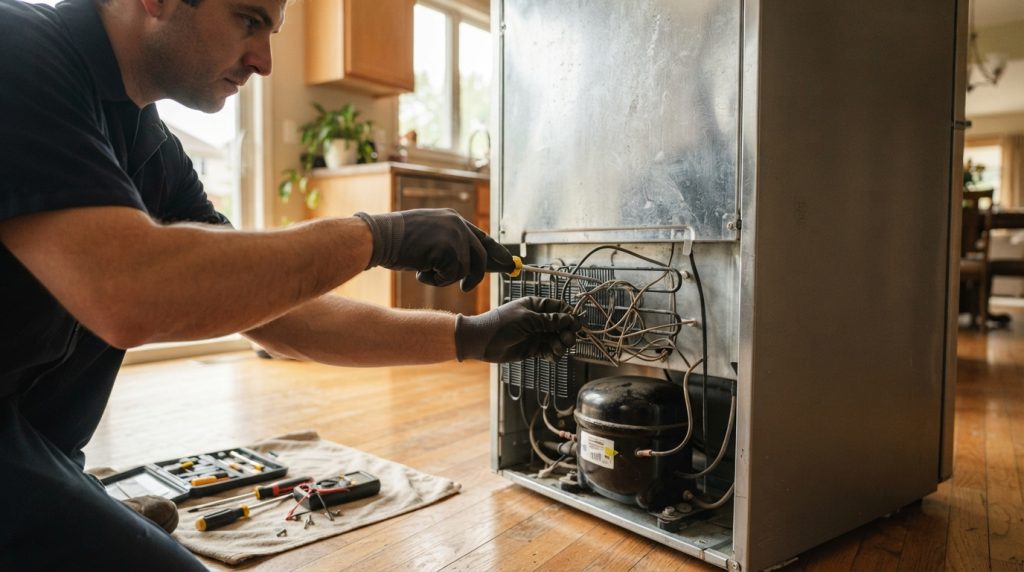
3. Checking condenser coils and fans for dust buildup or mechanical failure.
4. Evaluating the compressor and refrigerant lines if the unit is not cooling at all.
This stepwise approach helps confirm whether the issue is a simple fix, like a seal replacement, or something more involved, like a compressor failure. According to the U.S. Department of Energy, refrigerators account for a measurable share of household electricity use, which means a malfunctioning unit can also drive up energy costs while it struggles to maintain temperature.
Repair Versus Replacement: A Practical Comparison
Not every refrigerator problem justifies buying a new unit, but age and repair cost both factor into the decision. The table below outlines general considerations homeowners can use when weighing their options.
| Factor | Likely Repair | Likely Replacement |
| Age of unit | Under 8 years old | Over 10-12 years old |
| Issue type | Seal, thermostat, fan, or minor electrical fault | Multiple major component failures at once |
| Repair cost | Significantly less than a new unit | Approaching half the cost of a new refrigerator |
| Cooling history | First major issue | Repeated breakdowns in a short period |
These are general guidelines rather than fixed rules, and a technician’s on-site assessment should always take priority over assumptions based on age alone.
Preventing Future Cooling Problems
Routine maintenance can reduce how often a refrigerator needs repair in the first place. Simple habits make a measurable difference in how long components last.
• Vacuum condenser coils every few months to prevent dust-related overheating.
• Check door seals periodically for gaps by closing the door on a piece of paper and testing for resistance.
• Keep the refrigerator a few inches from the wall to allow proper airflow around the back panel.
• Avoid overpacking the interior, which can block vents and force the compressor to work harder.
These steps do not eliminate the need for repair entirely, but they reduce the frequency of major breakdowns and help the unit run more efficiently between service visits.
Frequently Asked Questions
How long does a typical refrigerator repair take? Most single-issue repairs, such as a seal or thermostat replacement, can be completed in one visit once the part is on hand.
Can a refrigerator be repaired if it has stopped cooling completely? Yes, in many cases, though the cause needs to be identified first since total cooling loss can stem from several different components.
Is it worth repairing an older refrigerator? It depends on the specific failure and repair cost relative to the unit’s remaining lifespan, which a technician can assess directly.
What should I do before calling a technician? Check that the unit is receiving power, confirm the thermostat setting, and note any unusual sounds or smells to describe during the service call.
A refrigerator that is cooling unevenly or making unfamiliar noises is sending an early signal worth acting on before food loss or a complete breakdown occurs. Reviewing the symptoms above and scheduling a diagnostic visit can clarify whether a straightforward repair will restore normal performance.