Summary:
• Forensic consults connect attorneys, insurers, and investigators with specialists who examine physical evidence tied to accidents, fires, structural failures, and product defects.
• Findings from these consults often support litigation, insurance claims, and regulatory reviews where technical clarity affects case outcomes.
• Reports typically combine site inspection, documentation review, and testing to explain how and why an incident occurred.
Forensic consults provide attorneys, adjusters, and investigators with technical analysis of physical evidence when the cause of an accident, fire, or structural failure is disputed. These evaluations translate engineering and scientific findings into reports that can withstand scrutiny in a courtroom or claims process.
Legal teams and insurance carriers rely on Forensic Consults when a case depends on establishing causation rather than assumption. A qualified consultant examines physical evidence, reviews documentation, and applies recognized testing methods to determine what happened and why. This process matters most in disputes where the outcome hinges on technical facts rather than conflicting personal accounts.
Based in Roseville, CA, Integrated Forensic Services, LLC works with clients involved in matters that originate across San Francisco, CA, where dense housing stock, older building infrastructure, and frequent construction activity contribute to disputes requiring independent technical review.
When Legal Teams Request a Forensic Consult
Attorneys and claims professionals typically seek forensic input when a case cannot move forward without an objective technical opinion. Common triggers include:
• Property damage claims involving fire, water intrusion, or structural movement
• Vehicle or equipment failures where mechanical cause is disputed
• Construction defect disputes between owners, contractors, and insurers
• Product liability claims requiring failure analysis
Each of these scenarios requires evidence that can hold up under cross-examination, which is why timing matters. Evidence degrades, scenes change, and memories fade, so early involvement of a consultant preserves the integrity of the findings.
How a Forensic Evaluation Is Conducted
A forensic consult generally follows a structured sequence rather than an informal walkthrough. The process is designed to produce findings that are repeatable and defensible.
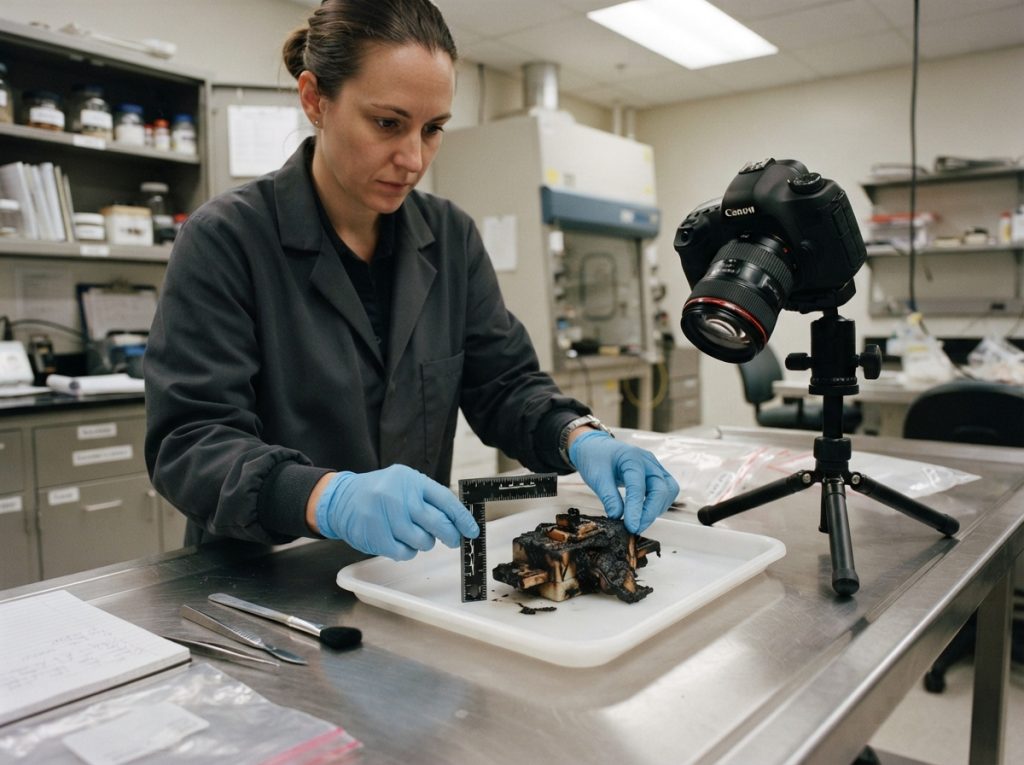
1. Scene or evidence inspection – The consultant documents physical conditions through photographs, measurements, and sample collection.
2. Document review – Maintenance records, incident reports, building plans, or product specifications are compared against physical findings.
3. Testing and analysis – Depending on the case, this may involve material testing, failure analysis, or reconstruction of the sequence of events.
4. Report preparation – Findings are compiled into a written report that states conclusions, supporting data, and the methodology used.
This structured approach matters because courts and regulatory bodies expect technical opinions to follow accepted scientific methods. The National Institute of Standards and Technology maintains research and guidance on forensic science standards that inform how evidence should be collected and analyzed to remain credible in legal settings.
Why Independent Analysis Matters in San Francisco, CA Cases
San Francisco, CA presents conditions that frequently generate disputes requiring technical review. Many buildings predate current code requirements, and seismic retrofitting, water intrusion, and aging utility systems are common sources of property claims.
• Older construction can obscure the true cause of a structural issue without destructive or semi-destructive testing.
• Dense urban conditions increase the number of parties involved in a single incident, from contractors to adjacent property owners.
• Climate factors specific to the region, including fog-driven moisture and seasonal storms, can accelerate material degradation that later becomes the subject of a claim.
An independent forensic opinion gives all parties a shared, evidence-based starting point rather than competing assumptions about what caused the damage.
Comparing Forensic Consult Scope by Case Type
| Case Type | Primary Evidence Reviewed | Typical Output |
| Structural or construction defect | Building materials, plans, inspection reports | Written causation report |
| Fire or water damage | Scene debris, moisture readings, ignition sources | Origin and cause analysis |
| Product or equipment failure | Physical component, maintenance history | Failure mode report |
| Vehicle or mechanical incident | Vehicle parts, event data, scene documentation | Reconstruction summary |
Frequently Asked Questions
What qualifies as a forensic consult in a legal case? It generally refers to a technical evaluation performed by a qualified specialist to determine the cause of damage, injury, or failure, with findings documented for use in litigation or claims.
How long does a forensic evaluation typically take? Timelines vary by case complexity, evidence availability, and whether destructive testing is required, so no fixed duration applies across all matters.
Can forensic findings be challenged in court? Yes. Opposing parties can question methodology, qualifications, or conclusions, which is why documented, standards-based processes are important.
Is a forensic consult the same as an insurance adjuster’s review? No. An adjuster evaluates a claim for coverage purposes, while a forensic consultant focuses on technical causation independent of policy terms.
Final Notes on Working With a Forensic Consultant
Selecting a consultant with documented methodology and clear reporting standards reduces the risk that findings will be dismissed later in a legal or claims process. Current availability details for Integrated Forensic Services, LLC are published for the local service area.