Quick take:
- Reverse osmosis forces tap water through a semipermeable membrane to filter out dissolved solids, metals, and other contaminants.
- A typical point-of-use system is certified to a national testing standard and can reduce lead, arsenic, nitrates, and similar substances.
- North Las Vegas, NV households dealing with mineral-heavy municipal water often use RO systems for cleaner-tasting drinking water at the tap.
Reverse osmosis is a water treatment process that pushes tap water through a semipermeable membrane under pressure, trapping dissolved minerals, metals, and other particles while letting purified water pass through. The result is drinking water with fewer dissolved solids and a noticeably cleaner taste than unfiltered tap water.
Homeowners researching Reverse Osmosis systems are usually trying to solve a specific problem: hard water spots, an odd taste or smell from the tap, or concern about contaminants reported in a municipal water quality report. Understanding how the membrane technology works helps clarify why it remains one of the most tested and widely recommended home filtration methods available today.
How the Membrane Filtration Process Works
An RO system relies on pressure, not heat or chemicals, to separate water molecules from everything else dissolved in it.
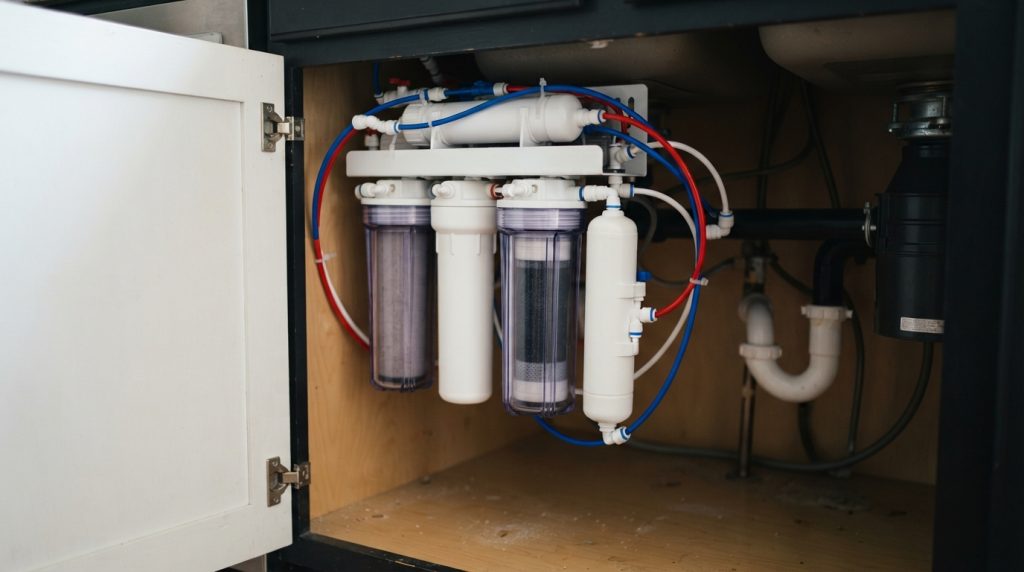
- Water enters the system and passes through a pre-filter to catch sediment and chlorine.
- Pressure forces water molecules through a semipermeable membrane while rejecting larger dissolved particles.
- Rejected material and concentrate are flushed to a drain line, while treated water collects in a storage tank.
- A final carbon filter polishes the water just before it reaches the faucet.
According to the EPA WaterSense guide to water treatment systems, RO systems use pressure to force water through a membrane that limits particle size, trapping contaminants and creating a stream of treated water. Systems built for home use are commonly tested against NSF/ANSI 58, the primary U.S. standard referenced for point-of-use reverse osmosis drinking water treatment.
What Reverse Osmosis Removes From Tap Water
The membrane’s pore size is small enough to block a wide range of dissolved substances that standard carbon filters miss.
| Contaminant Category | Typically Reduced by RO | Notes |
| Dissolved salts and minerals | Yes | Improves taste and reduces scale buildup |
| Lead, arsenic, chromium | Yes | Recognized by federal guidance as effective reduction method |
| Nitrates and some pesticides | Yes | Varies by membrane and system configuration |
| Beneficial minerals (calcium) | Also removed | Trade-off of the filtration process |
The membrane traps and rejects contaminants, creating a stream of treated water that passes through while the system improves taste and odor and removes sodium, dissolved inorganics, and organics. The same guidance notes a tradeoff: the process also removes beneficial minerals such as calcium along with contaminants, which is why some households pair RO with remineralization stages.
Everyday Benefits for North Las Vegas Households
Municipal water in the Las Vegas valley is known for mineral content that affects taste, appliance lifespan, and fixture buildup over time. For residents in North Las Vegas, NV, a whole-home or under-sink RO system addresses several day-to-day concerns:
- Better-tasting drinking and cooking water without a mineral or chlorine aftertaste.
- Reduced scale buildup on faucets, glassware, and small kitchen appliances.
- Lower reliance on bottled water, since filtered tap water becomes a practical substitute.
- Added filtration for specific contaminants that a household’s water test report may flag.
One tradeoff worth noting before installation: RO systems produce wastewater during filtration. Reverse osmosis systems generate water waste during treatment and will increase home or building water use once installed, with EPA estimating that a typical point-of-use RO system generates at least five gallons of water waste for every gallon of treated water it produces. Newer, more efficient membrane designs can reduce this ratio, which is a useful question to raise before choosing a specific unit.
Maintenance Considerations Over Time
RO systems are low-maintenance compared to whole-house filtration alternatives, but they are not maintenance-free.
- Pre-filters and post-filters typically need replacement on a set schedule, often every six to twelve months depending on water usage.
- The membrane itself has a longer lifespan but should be checked periodically for reduced flow or pressure.
- Storage tanks and drain lines benefit from an annual inspection to confirm there are no leaks or clogs.
Skipping scheduled filter changes is the most common reason an RO system’s output quality declines over time, since a saturated pre-filter allows more sediment and chlorine to reach the membrane.
Frequently Asked Questions
Does reverse osmosis remove all contaminants from tap water? No. The membrane is highly effective against dissolved solids, heavy metals, and many organic compounds, but some gases and certain very small molecules can pass through depending on the system configuration.
How often do RO filters need to be replaced? Pre-filters and carbon filters are typically replaced every six to twelve months, while the membrane itself usually lasts several years under normal residential use.
Is reverse osmosis water safe to drink long-term? Yes, RO-treated water is widely used as a safe drinking water source; some households add a remineralization stage to replace minerals removed during filtration.
Does an RO system waste a lot of water? Older systems can use several gallons of water per gallon treated, though efficiency has improved in newer designs, as reflected in current EPA guidance on water-saving RO models.
Business Information and Local Service Area
Based in Las Vegas, NV, Fast Plumbing Service serves customers across North Las Vegas, NV, with plumbing and water treatment work handled by licensed staff.
Published details for Know more about Fast Plumbing Service outline system options and maintenance considerations for the local service area.