Short answer:
• Fire damage restoration repairs structural, smoke, soot, and water damage left after a house fire and helps return a property to a safe, livable condition.
• The process includes inspection, water removal, soot and odor treatment, cleaning of belongings, and structural repair.
• Response time matters because smoke residue and moisture can cause additional damage within hours of a fire being extinguished.
A house fire rarely ends when the flames are out. Smoke particles, soot, and the water used to extinguish the blaze continue to affect a structure long after firefighters leave, which is why fire damage restoration in Naperville IL typically begins with an assessment of both visible and hidden damage. Homeowners in Naperville, IL often need this service after kitchen fires, electrical fires, or damage caused by lightning strikes and appliance malfunctions. Learn More About Parkside Restoration and its fire damage services.
Fire restoration is a distinct process from general contracting because it addresses chemical residue, structural weakening, and airborne contaminants at the same time. According to federal fire recovery guidance, a home should not be entered until the fire department confirms it is safe, since hidden hot spots and compromised structural elements can pose ongoing risks after a fire is extinguished.
What Happens During the Restoration Process
Restoration work generally follows a sequence designed to prevent secondary damage while salvaging as much of the property as possible.
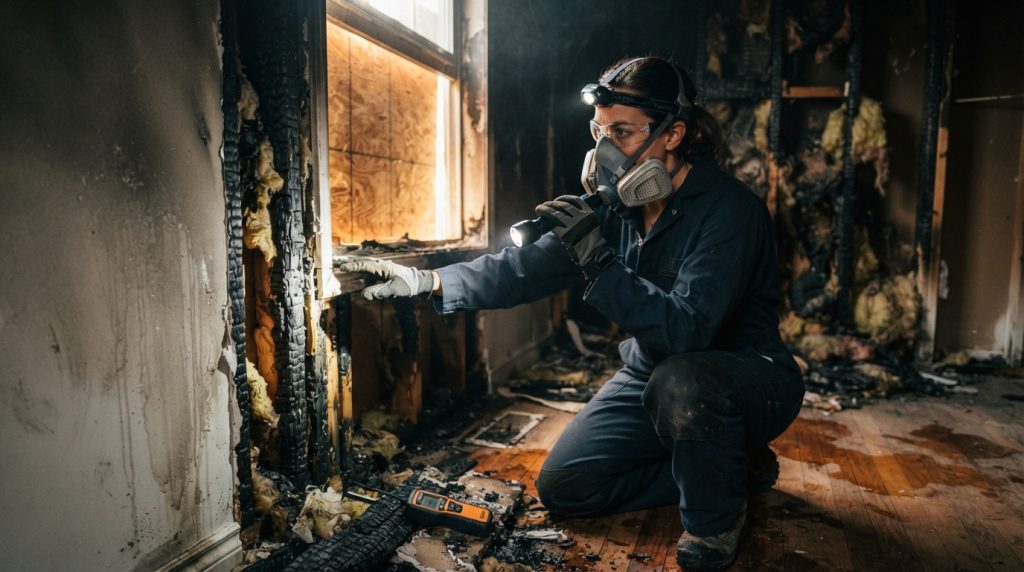
1. Inspection and damage assessment – identifying the extent of fire, smoke, and water damage throughout the structure.
2. Water removal and drying – extracting water used to fight the fire before mold or wood rot develops.
3. Soot and smoke residue removal – cleaning walls, ceilings, and HVAC systems where fine particles settle.
4. Odor treatment – addressing smoke odor that can linger in fabrics, drywall, and ductwork.
5. Structural repair – rebuilding damaged framing, drywall, flooring, or roofing as needed.
Each step matters because skipping drying or odor treatment can allow problems to resurface weeks later, even if visible damage appears resolved.
Why Smoke and Soot Require Specialized Cleaning
Soot is acidic and abrasive, which means ordinary household cleaning can grind particles deeper into fabric, wood, and painted surfaces rather than removing them. Smoke odor also penetrates porous materials like drywall and insulation, often requiring more than surface cleaning to eliminate. Fire-damaged properties may also involve water damage from suppression efforts, creating conditions where mold can begin forming within one to two days if moisture is not addressed.
Local Factors That Affect Fire Recovery Timelines
Properties in Naperville, IL face a mix of older housing stock and newer construction, which can affect how a structure responds to fire and water exposure.
| Factor | Impact on Restoration |
| Older homes with plaster walls | May retain odor longer than drywall |
| Attached garages | Common site of appliance and electrical fires |
| Seasonal humidity | Can slow drying time after suppression water exposure |
| Finished basements | Require additional moisture monitoring |
Base operations for restoration crews serving this region are located outside the immediate area. Based in Bolingbrook, IL, Parkside Restoration serves customers in Naperville, IL, with technicians traveling to the property rather than operating from a local storefront.
Frequently Asked Questions
How soon should restoration begin after a fire? Restoration work should begin as soon as the fire department confirms the property is safe to enter, since delays in water extraction and soot cleanup can increase the extent of secondary damage.
Can smoke odor be fully removed from a home? Smoke odor can often be substantially reduced or eliminated through deodorization techniques, though the outcome depends on how deeply residue has penetrated porous materials.
Is fire damage restoration covered by homeowners insurance? Many homeowners insurance policies cover fire damage restoration, though coverage details vary by policy and should be confirmed directly with the insurance provider.
What is the difference between fire damage and smoke damage? Fire damage refers to direct structural or material destruction from flames, while smoke damage refers to residue, discoloration, and odor affecting areas the fire did not directly reach.
Business Info
Parkside Restoration operates as a commercial and residential emergency management company based in Bolingbrook, IL. Information about the business location and reviews can be viewed through Parkside Restoration on its Google Business Profile.
Next Steps for Homeowners
Current listing information for Locate Parkside Restoration on the Map is published for reference by property owners researching local service providers. Reviewing available public records and professional guidance before beginning any fire recovery project can help homeowners make informed decisions about next steps.