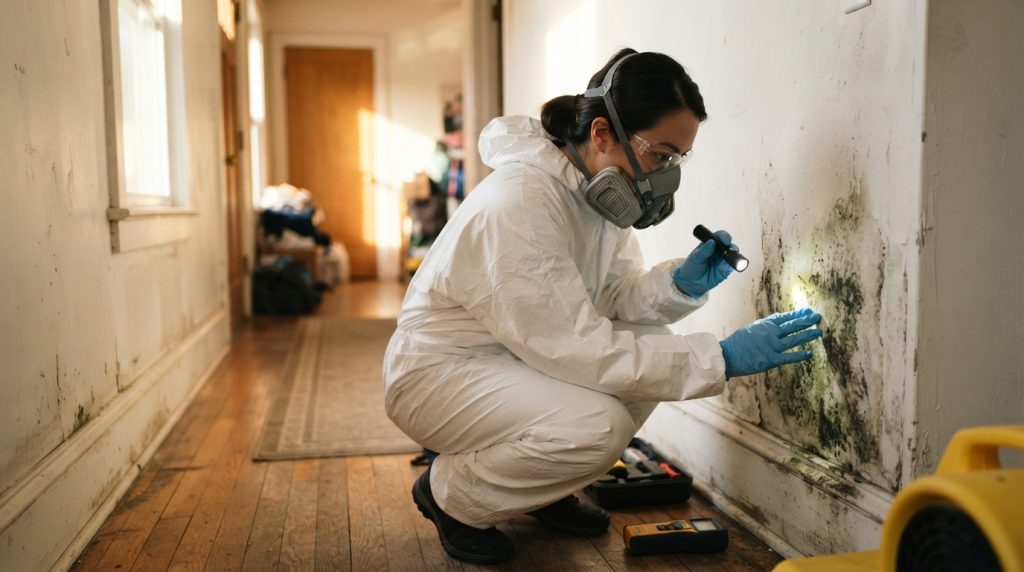
• Mold remediation involves locating moisture sources, containing affected materials, and safely removing mold to restore indoor air quality.
• Florida’s humidity and frequent storms make homes in Naples, FL particularly prone to recurring mold issues.
• Professional remediation differs from simple cleaning because it addresses the underlying moisture problem, not just visible growth.
Mold remediation is the process of identifying the moisture source behind mold growth, containing the affected area, and removing contaminated materials so the problem does not return. For homeowners, understanding this process helps distinguish a routine cleaning task from a situation that calls for trained intervention.
Humid climates and frequent water intrusion events make Mold Remediation Naples FL a recurring concern for property owners in coastal Florida communities. The process typically becomes necessary after flooding, roof leaks, plumbing failures, or prolonged high humidity that allows spores to colonize drywall, wood framing, or insulation.
Why Naples, FL Properties Face Elevated Mold Risk
Southwest Florida’s climate creates near-constant conditions for mold growth, particularly in older housing stock and properties near the coast.
• High year-round humidity keeps indoor moisture levels elevated even without an active leak.
• Hurricane season and heavy seasonal rainfall increase the likelihood of water intrusion through roofs, windows, and foundations.
• Air conditioning systems that cycle on and off frequently in warm months can produce condensation that feeds mold behind walls or in ductwork.
According to the EPA’s homeowner guide to mold cleanup, mold remediation after a disaster should begin only after personal protective equipment is in place and the moisture source has been addressed. The agency also notes that cleanup should be verified complete before a home is reoccupied.
How Professional Mold Remediation Works
A structured remediation process generally follows several stages, regardless of which company performs the work.
1. Inspection and assessment – identifying the extent of mold growth and the moisture source feeding it.
2. Containment – sealing off the affected area with barriers to prevent spores from spreading to unaffected rooms.
3. Removal – extracting contaminated materials such as drywall, insulation, or flooring that cannot be cleaned.
4. Air filtration and cleaning – using HEPA filtration to capture airborne spores during and after removal.
5. Drying and moisture correction – resolving the underlying leak or humidity issue so mold does not return.
6. Verification – a final inspection to confirm the area meets cleanup standards before reconstruction begins.
This sequence aligns with federal guidance indicating that the water or moisture problem must be fully corrected before remediation can be considered finished.
DIY Cleanup vs. Professional Remediation
Not every mold issue requires a specialized crew. The scope of the problem generally determines the right approach.
|
Factor |
DIY-Appropriate |
Professional Remediation Needed |
|
Affected area size |
Under roughly 10 square feet |
Larger than 10 square feet |
|
Cause |
Surface mildew, no hidden leak |
Hidden leak, flooding, or recurring growth |
|
Materials involved |
Hard, non-porous surfaces |
Drywall, insulation, subflooring |
|
Health concerns |
None reported |
Respiratory symptoms among occupants |
Properties affected by flooding, long-term leaks, or mold spreading inside wall cavities typically fall outside the scope of a simple cleaning job and benefit from contained, professional removal.
Frequently Asked Questions
How long does mold remediation typically take? Smaller jobs may be resolved in a few days, while larger projects involving structural drying and material removal can take longer depending on the extent of damage.
Is air testing necessary before remediation begins? Visible mold growth generally does not require testing beforehand, since the presence of mold is already confirmed; testing is more useful afterward to verify the area is clear.
Can painting over mold solve the problem? No. Covering mold without removing it allows the colony to continue growing beneath the surface, which worsens the underlying issue over time.
What makes Naples, FL homes especially susceptible to mold? Consistent humidity, seasonal storms, and air conditioning condensation create ongoing moisture conditions that support mold growth in both older and newer construction.
Business Info
Property owners researching remediation options can review verified service details from 911 Restoration of Naples, a restoration company based in USA that serves customers across Naples, FL. Reviewing documented service areas and offerings before making a decision helps homeowners understand what a remediation process typically includes in their region.
Next Steps for Homeowners
Current service area information for 911 Restoration of Naples is published for property owners researching remediation options in the region.
Mold remediation remains a process-driven response to moisture problems rather than a one-time fix, and understanding each stage helps homeowners set realistic expectations before any work begins. Recognizing the signs that distinguish a minor surface issue from a larger structural concern allows property owners in humid climates to respond appropriately and avoid recurring damage.


