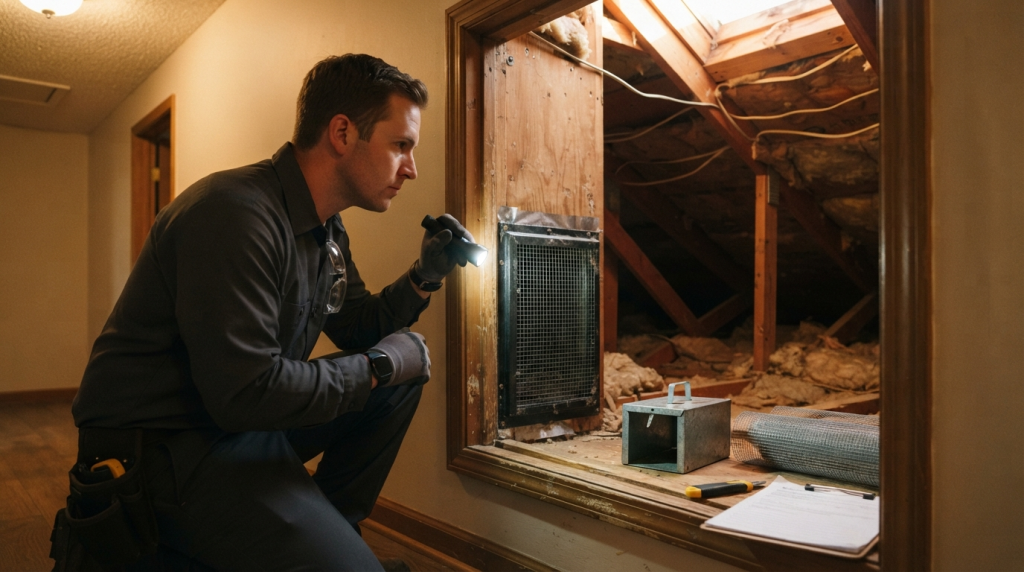
Quick take:
- Effective rodent removal combines exclusion (sealing entry points), trapping, and sanitation rather than relying on a single method.
- Rodent droppings and nesting material should be wetted with disinfectant before cleanup to limit airborne health risks.
- Humid, warm climates like Port Charlotte, FL create year-round conditions that favor rats and mice seeking shelter in structures.
Safe and effective rodent removal means locating entry points, sealing them, trapping existing rodents, and sanitizing contaminated areas to prevent reinfestation and reduce health risks. A single trap or bait box rarely solves the problem on its own, since rodents can re-enter through any gap wider than a pencil.
Homeowners searching for rodent removal are usually dealing with scratching sounds in walls, droppings in pantries, or chewed wiring, all signs that rats or mice have already found a way inside. Addressing the issue typically requires more than store-bought traps, since untreated entry points allow new rodents to move in as quickly as old ones are removed.
Why Rodent Problems Persist in Florida Homes
Florida’s climate and housing stock create conditions that make rodent activity a recurring concern rather than a one-time event.
- Warm, humid weather in Port Charlotte, FL allows rodent activity to continue through all four seasons instead of slowing in winter.
- Older homes with roof vents, soffits, and crawl spaces offer easy access points for rats and mice seeking shelter.
- Nearby canals, vegetation, and dense landscaping common throughout the area give rodents cover as they move toward structures.
These factors mean that exclusion work, not just trapping, is central to keeping rodents from returning once they are removed.
The Core Steps of a Rodent Removal Process
A structured approach generally follows the same sequence recommended by public health agencies, which emphasize three repeatable actions for rodent control.
- Inspect and identify entry points. Technicians look for gaps around rooflines, vents, and utility penetrations where rodents are getting in.
- Seal and exclude. Openings are closed with materials rodents cannot gnaw through, cutting off future access.
- Trap existing rodents. Traps are placed in attics and other active zones to remove rodents already inside the structure.
- Clean and disinfect. Droppings, nesting material, and urine are treated before removal, since dry sweeping or vacuuming can release contaminants into the air.
The CDC’s guidance on trapping rodents recommends setting traps in areas where rodent activity has been observed and continuing until no new activity is seen for roughly a week. This same trap-seal-clean framework underlies most professional rodent programs, including multi-step approaches that combine exclusion work with ongoing bait station monitoring.
DIY vs. Professional Rodent Removal
| Factor | DIY Approach | Professional Service |
|---|---|---|
| Entry point sealing | Limited to visible, reachable gaps | Full exterior inspection, including roofline and attic access points |
| Equipment | Store-bought snap traps | Multiple traps plus perimeter bait stations |
| Sanitation | Manual cleanup with household disinfectant | Attic vacuuming, sanitizing, and deodorizing of contaminated areas |
| Monitoring | One-time effort | Scheduled follow-up and bait station refills |
DIY methods can help with minor, isolated sightings, but recurring activity in attics or wall voids often points to entry points that are difficult to find and seal without a full exterior inspection.
Based in North Venice, FL, Good News Pest Solutions serves customers in Port Charlotte, FL and surrounding Gulf Coast communities with pest management services that include rodent control programs.
FAQ
How do I know if I have a rodent problem? Common signs include droppings near food storage areas, gnaw marks on wiring or wood, scratching sounds in walls or attics, and a musky odor in enclosed spaces.
Is it safe to clean up rodent droppings myself? Small amounts can be cleaned with gloves and disinfectant after wetting the area first, but heavy contamination in attics or crawl spaces often calls for professional handling due to airborne health risks.
How long does rodent removal take to work? Trapping typically continues until no new rodent activity is observed for about a week, while sealing and sanitation are usually completed in a single visit, with monitoring continuing afterward.
Can rodents come back after removal? Yes, if entry points are not fully sealed. This is why exclusion work is considered as important as trapping in any lasting rodent removal plan.
Monitoring and Follow-Up
Rodent activity tends to resume if exclusion repairs are incomplete or if outdoor populations near a property remain high. Periodic inspection of attics, soffits, and perimeter areas helps confirm that sealed points remain intact and that bait stations, where used, are still functioning.
Published service details for Good News Pest Solutions cover the Gulf Coast service area referenced in this article.


