Recap:
• Metal roofing panel profile, gauge, and wind rating should match local exposure conditions before cost or color become deciding factors.
• Standing seam systems generally outperform exposed-fastener panels in wind uplift resistance and long-term leak prevention.
• Permits, underlayment type, and attachment method affect code compliance under the Florida Building Code 8th Edition.
Choosing the right roofing system involves evaluating wind resistance, durability, maintenance requirements, and the property’s exposure to severe weather. Different roofing materials and panel designs offer varying levels of protection, making it important to consider local climate conditions before making a decision. Merritt Roofing and Construction Inc. can help property owners assess their roofing needs and identify suitable options for Central Florida’s storm-prone conditions.
Homeowners in Lake Wales, FL often compare metal roofing against asphalt shingles or tile because of its resistance to wind-driven debris and lower long-term maintenance demands. Panel profile, substrate material, and fastening method all factor into how a system performs once installed, and these choices matter more in inland Polk County than brand or finish alone.
Panel Types and How They Perform
Metal roofing is sold in a few distinct profiles, each with different installation methods and wind performance characteristics.
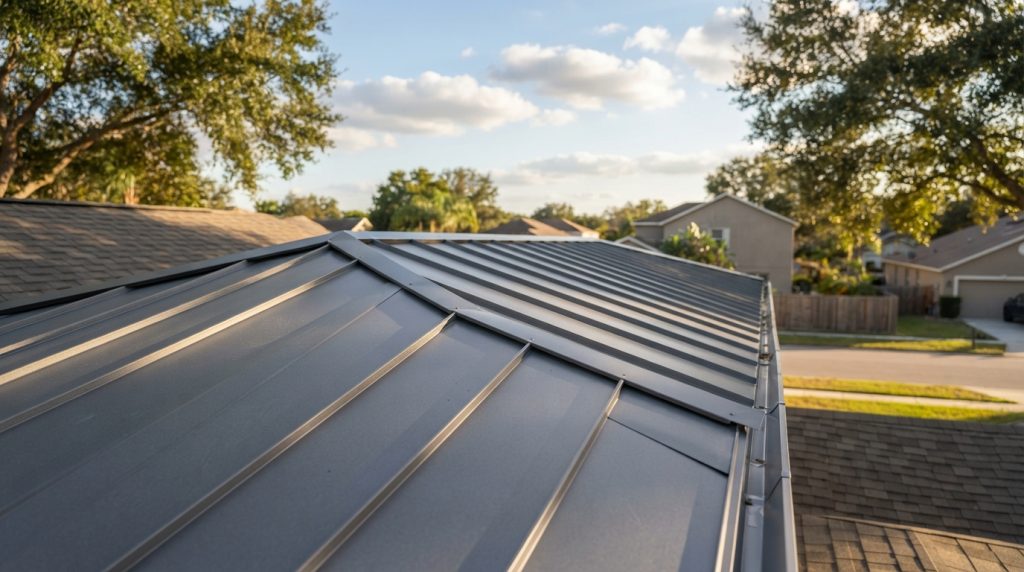
• Standing seam : Concealed fasteners and interlocking seams reduce leak points and generally offer stronger wind uplift performance than exposed-fastener designs.
• 5V-crimp : A traditional exposed-fastener panel often used on older homes and outbuildings, with moderate wind resistance.
• Corrugated : Economical and lightweight, typically suited to lower-wind applications such as sheds or agricultural structures.
| Panel Type | Typical Wind Rating | Fastener Style | Common Use |
| Standing Seam | 160-180 mph | Concealed | Primary residential/commercial roofs |
| 5V-Crimp | 110-140 mph | Exposed | Residential retrofits |
| Corrugated | 100-130 mph | Exposed | Outbuildings, secondary structures |
These figures come from manufacturer and industry wind-rating data compiled in a 2026 Florida metal roofing guide, and actual performance depends on fastener spacing, deck condition, and installation quality.
Code Requirements That Shape the Decision
Florida roofing projects are governed by the Florida Building Code 8th Edition, which ties material selection to wind-load calculations based on location and exposure category. Metal panel roof systems installed under this code must be tested according to standards such as UL 580, ASTM E1592, or TAS 125, depending on the panel type and attachment method, according to the Florida Building Code.
A few practical compliance points apply to most residential metal roof projects in Polk County:
1. A sealed roof deck with self-adhering underlayment is typically required for secondary water resistance.
2. Roof-to-wall connections need clips or straps spaced according to the applicable wind zone.
3. A building permit and final inspection are required before a replacement roof is considered complete.
Skipping any of these steps can delay a certificate of occupancy or complicate an insurance wind mitigation inspection later.
Matching the System to the Property
Not every home needs the highest wind rating available, but a few property-specific factors should guide the final decision.
• Roof pitch and slope : Steeper slopes shed water faster and may allow for a wider range of panel profiles.
• Substrate material : Aluminum resists corrosion better in areas with heavy salt exposure, while Galvalume steel is a common cost-effective option for inland properties.
• Existing roof condition : An inspector typically checks the deck and framing before recommending a tear-off versus an overlay installation.
• Expected lifespan : Properly installed metal roofing commonly lasts several decades longer than asphalt shingles, reducing the frequency of full replacements.
Energy performance is another consideration, since reflective metal finishes can reduce attic heat gain during Florida’s long cooling season, though actual savings vary by home orientation and attic ventilation.
Frequently Asked Questions
Does metal roofing require special underlayment in Florida? Yes. Code-compliant installations generally require a sealed roof deck using self-adhering or synthetic underlayment rated for the applicable wind zone, which helps prevent water intrusion if panels are damaged.
How does panel profile affect insurance costs? Standing seam systems with concealed fasteners often qualify for more wind mitigation credit categories than exposed-fastener panels, though specific discounts depend on the insurer and inspection results.
Can metal roofing be installed over an existing roof? In some cases, an overlay is possible, but the decision depends on the condition of the existing deck, local code allowances, and warranty terms for the new system.
Is metal roofing suitable for all home styles in Lake Wales, FL? Most residential profiles can be adapted to common roof pitches and architectural styles found in Lake Wales, FL, though steep or complex rooflines may limit certain panel widths or seam patterns.
A roofing contractor can evaluate deck condition, wind zone requirements, and panel options specific to a property before work begins. Additional details on local licensing and project history can be reviewed by View Merritt Roofing and Construction Inc. on Google Maps.