Quick take:
• Visible dust buildup, musty odors, and uneven airflow are the clearest signs vents need attention.
• A complete system check covers supply and return ducts, registers, and the air handler, not just the visible vent covers.
• EPA guidance says cleaning is warranted mainly for visible mold, pest infestation, or heavy debris release rather than on a fixed schedule.
Dust collecting around a register, a musty smell when the HVAC system kicks on, or rooms that never seem to heat or cool evenly are the most common clues that ductwork needs a closer look. These signs point to buildup inside the system rather than a simple surface wipe-down fixing the problem.
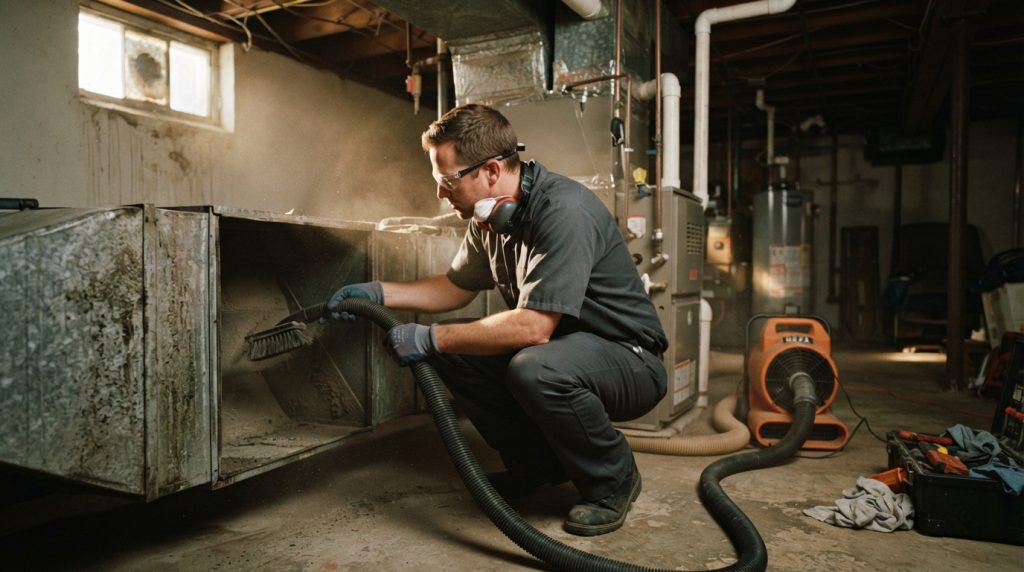
A thorough Vent Cleaning service addresses the registers, supply and return ducts, and connected HVAC components, since debris trapped deep in the system rarely clears on its own. Homeowners in older housing stock around Buffalo, NY often notice these symptoms more during the heating season switch, when ducts that sat idle push accumulated dust through the home.
Common Warning Signs to Watch For
Several physical and sensory cues suggest ductwork has reached the point where a professional inspection makes sense.
• Visible dust or debris blowing from registers when the system starts
• A persistent musty or stale odor that returns after general house cleaning
• Noticeably reduced airflow in one or more rooms compared to others
• Dust buildup that reappears quickly on furniture and surfaces near vents
• Signs of pest activity, rodent droppings, or insect nests near duct openings
• Visible mold growth on register covers or inside accessible duct sections
Not every sign requires immediate action. According to EPA guidance on residential duct cleaning, the agency does not recommend that air ducts be cleaned routinely, but only as needed. Pollutants that enter the home from outdoor sources and everyday indoor activities often contribute more to air quality concerns than dirty ducts alone.
When Cleaning Actually Makes Sense
The EPA outlines specific conditions where professional attention is warranted rather than a calendar-based schedule. Homeowners should consider duct cleaning if there is substantial visible mold growth inside hard surface ducts or on other HVAC components, if ducts are infested with rodents or insects, or if ducts are clogged with excessive dust and debris that is being released into the home through supply registers.
|
Condition Observed |
Likely Cause |
Recommended Response |
|
Musty odor near vents |
Moisture or mold growth |
Inspect ducts, address moisture source |
|
Dust blowing from registers |
Debris buildup in supply ducts |
Full system cleaning |
|
Rodent droppings or nests |
Pest infestation |
Cleaning plus sealing entry points |
|
Uneven room temperatures |
Blocked or disconnected ductwork |
Inspection before cleaning |
A proper cleaning service should also cover supply and return ducts and registers, grilles and diffusers, the heat exchanger, cooling coil, drain pan, fan and housing, and the air handler rather than just the visible duct runs.
What to Do Before Scheduling Service
A few practical steps help homeowners decide whether cleaning is the right next step and what to expect from a provider.
1. Inspect accessible vent covers and the first few feet of visible ductwork for dust, debris, or moisture staining.
2. Note any recent renovation work, pest sightings, or water damage near the HVAC system.
3. Ask a prospective provider whether the service covers the full system, including the air handler and coil, not just the ducts.
4. Confirm whether vacuum equipment exhausts outdoors or uses HEPA filtration if venting indoors.
Buffalo, NY homes with older ductwork or recent renovation dust are more likely to show these warning signs than newer construction with sealed systems. Based in Niagara Falls, NY, a duct cleaning provider serving the wider Buffalo, NY region can typically schedule an inspection to confirm whether cleaning, repair, or simple maintenance is the right fit.
Frequently Asked Questions
How long does a full duct cleaning service take? Service time depends on home size and duct layout, with most residential systems requiring a few hours to complete thoroughly, including registers, supply lines, and return ducts.
Does duct cleaning lower energy bills? Dust on duct walls has not been shown to significantly affect energy costs, so cost savings should not be the primary reason for scheduling a cleaning.
Can dirty vents cause allergy symptoms? Indoor air quality involves many factors beyond duct cleanliness, including filtration, humidity, and general household dust, so vent cleaning alone may not resolve allergy symptoms.
Is dryer vent cleaning different from HVAC duct cleaning? Yes, dryer vent cleaning addresses lint buildup in a separate exhaust system, while HVAC duct cleaning covers the home’s heating and cooling air distribution network.
Current availability details for Pure AirCare are published for the local service area. Homeowners weighing these signs against their own system’s condition can use that information to decide on next steps before committing to a full cleaning appointment.
