Quick summary:
• Ant colonies operate on scent trails and shared food sources, which is why single-ant treatments rarely stop an infestation.
• Effective ant control in Brentwood, CA depends on locating the nest or colony structure, not just the ants visible indoors.
• Sealing entry points and removing food/moisture sources reduces repeat invasions more reliably than surface spraying alone.
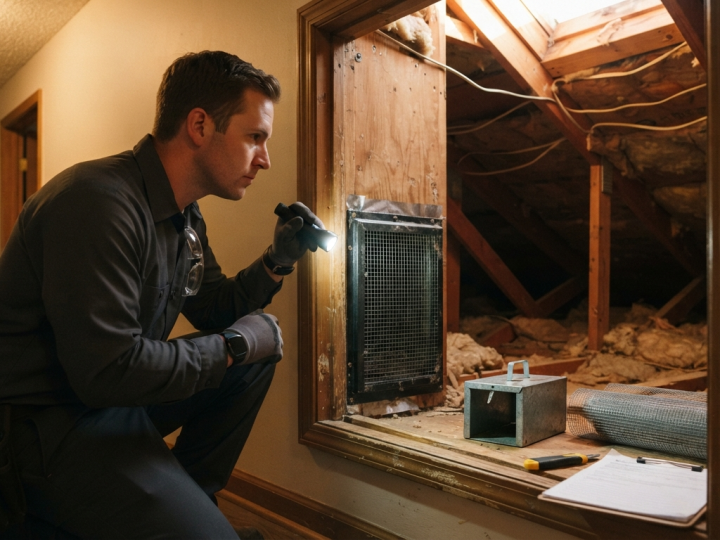
Ants entering a kitchen or bathroom are almost never a standalone problem; they represent scouts or foragers connected to a larger colony nearby. Lasting Ant Control depends less on killing the ants seen on a counter and more on understanding how colonies communicate, forage, and relocate when disturbed.
Ants rely on pheromone trails laid down by scouts to guide other workers to food. Wiping away a visible trail with soap and water can interrupt foraging temporarily, but it does not address the nest producing new workers. Colonies can also split or “bud” into satellite nests when a main colony senses a threat, which sometimes makes infestations appear worse after an incomplete treatment attempt.
Why Ants Return After Simple Fixes
Many households treat visible ants with store-bought sprays, only to see activity resume within days or weeks. This pattern usually points to one of three underlying issues.
• The queen and core nest were never reached, so worker ants continue to be produced.
• A secondary trail or entry point was missed, allowing foraging to continue uninterrupted.
• Conditions that attract ants, such as excess moisture or accessible food, were not corrected.
Because ant colonies can include thousands of workers supporting a single reproductive queen, removing the visible foragers has a limited effect on the colony’s overall survival.
Seasonal Ant Pressure in Brentwood, CA
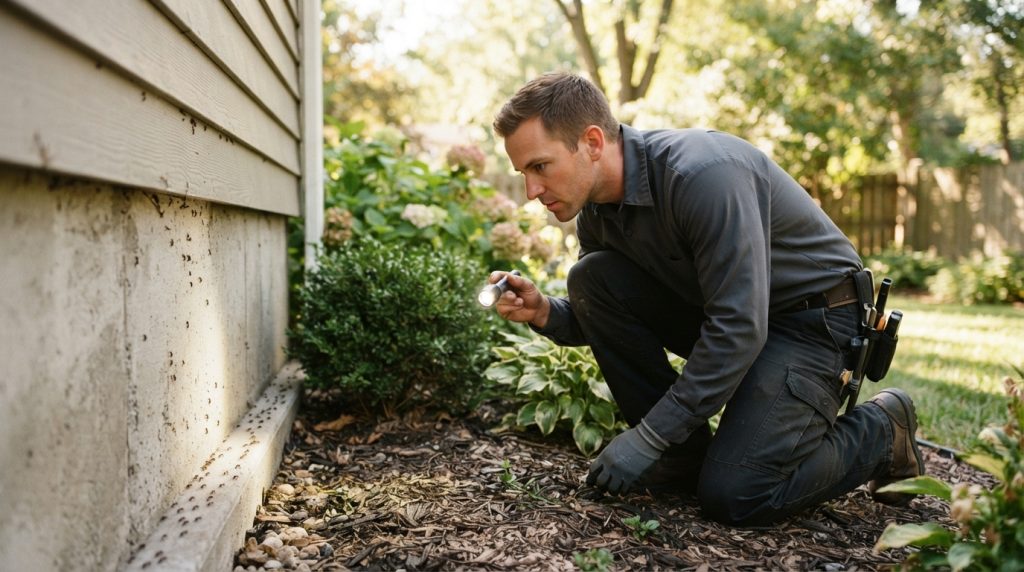
Local climate and housing patterns influence how often ants move indoors. In Brentwood, CA, warmer months tend to drive increased foraging activity as ants search for water and food sources closer to structures, while cooler, wetter periods can push colonies to seek shelter inside walls or foundations. Homes with irrigation systems, mulch beds, or dense landscaping near the foundation often see more consistent ant activity because these features retain moisture ants are drawn to.
According to the University of California Statewide IPM Program, ant management is most effective when it combines sanitation, exclusion, and targeted baiting rather than relying on a single method. This integrated approach aligns with how pest management professionals typically assess an active infestation before applying treatment.
Inspection-Based Treatment Versus Spot Spraying
The difference between short-term relief and long-term control often comes down to whether a treatment is based on inspection findings or applied reactively to visible ants.
| Approach | Typical Method | Long-Term Result |
| Spot spraying | Treats visible ants/trails only | Temporary; colony often survives |
| Perimeter barrier only | Treats exterior walls/foundation | Reduces entry but may miss interior nests |
| Inspection-based baiting | Identifies trails, nest location, species | Targets colony directly; more durable control |
| Exclusion + sanitation | Seals entry points, removes attractants | Prevents re-infestation long-term |
Baiting strategies work by allowing foraging ants to carry slow-acting bait back to the nest, where it is shared with other workers and the queen. This method is generally considered more effective for colony elimination than sprays that kill only contacted insects.
Practical Steps Homeowners Can Take
While professional inspection identifies nest locations and species-specific behavior, a few preventive habits support longer-term results between treatments.
1. Store food in sealed containers and wipe down counters to reduce scent cues.
2. Repair leaky faucets or irrigation lines that create consistent moisture near the foundation.
3. Trim vegetation and mulch away from exterior walls to reduce bridging points.
4. Seal visible cracks around windows, doors, and utility penetrations.
Based in Pleasanton, CA, Patriot Pest Management, Inc extends service coverage to properties throughout Brentwood, CA, where seasonal ant activity is common in both residential and landscaped properties.
Frequently Asked Questions
Why do ants keep coming back after I clean the area where I saw them? Cleaning removes pheromone trails temporarily, but the colony producing new workers is usually located elsewhere, often inside walls, under slabs, or in soil near the foundation.
Are certain ant species harder to control than others? Yes. Species that form multiple interconnected colonies, sometimes called supercolonies, are generally more difficult to eliminate with a single treatment because killing one nest does not affect the others.
Does weather affect ant activity in Brentwood, CA? Warmer, drier periods typically increase foraging as ants search for water, while cooler or wetter conditions can push colonies toward indoor shelter.
Is bait more effective than spray for long-term control? Bait is generally considered more effective for colony-level control because foraging ants carry it back to the nest, affecting the broader colony rather than only the ants directly contacted.
Business Info
Patriot Pest Management, Inc is based in Pleasanton, CA and extends service coverage to surrounding communities, including Brentwood, CA.
Next Steps for Ant Activity Concerns
Current service area information for Patriot Pest Management, Inc is published for reference by property owners evaluating local pest management options.