At glance:
- Steel rollers support heavy loads in gravity and powered conveyor systems used across warehouses and industrial facilities.
- Load capacity depends on roller diameter, wall thickness, and bearing type, with heavy-duty units built for the highest demands.
- Routine lubrication, alignment checks, and cleaning extend service life and reduce unplanned downtime.
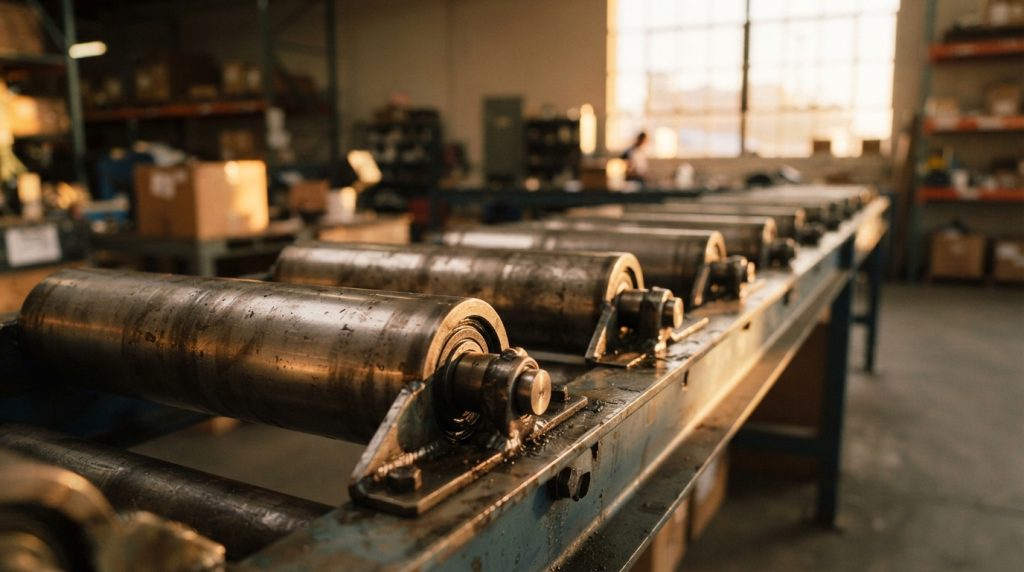
Steel rollers are cylindrical components used in conveyor systems to move products along a frame, either by gravity or motorized power, while carrying loads ranging from light packages to heavy industrial materials. They remain a standard choice in material handling because of their strength-to-cost ratio compared with plastic or nylon alternatives.
Steel rollers are typically built from a steel tube fitted with an internal shaft and bearings, and manufacturers can adjust length, diameter, and axle size to match a specific conveyor layout. This customization helps facilities fit rollers into existing frames without redesigning an entire line. Steel is a common choice for applications involving heavy loads, abrasive surfaces, or demanding daily use, since the tube construction stands up to impact and wear better than lighter materials. For operations that need replacement rollers or a custom specification, Steel Rollers from Conveyor Systems & Engineering, Inc. can be matched to your frame width, load requirements, and mounting style, so you can keep equipment running without a full system overhaul.
How Steel Rollers Function in a Conveyor System
A steel roller works by rotating on a fixed axle while the outer tube supports and moves the product resting on top of it. The bearings inside the roller reduce friction, allowing items to travel smoothly whether the system relies on gravity or a motor-driven belt.
- Gravity systems use a slight decline so products move under their own weight across the rollers.
- Powered systems use a motor, belt, or chain to drive the rollers and push materials along flat or inclined paths.
- Sleeve bearing designs are self-lubricating and often outperform standard ball bearings in washdown, food handling, or high-temperature settings.
Load Capacity and Material Considerations
Load capacity is one of the most common questions facilities ask before specifying a roller for a new or retrofitted line. Steel conveyor rollers can support loads ranging from hundreds to thousands of pounds depending on diameter, wall thickness, and bearing strength, and heavy-duty units with strengthened parts provide the highest capacity for demanding operations.
|
Material Type |
Best Suited For |
Key Advantage |
|
Steel |
Heavy loads, industrial use |
High strength, cost-effective |
|
Stainless Steel |
Food, wash-down, corrosive areas |
Corrosion and moisture resistance |
|
PVC/Nylon |
Light-duty applications |
Lower cost, lighter weight |
Facilities handling abrasive materials, extreme loads, or severe environments, such as mining operations, generally require heavy-duty steel or reinforced rollers built to withstand continuous stress. Proper system design also allows safe and efficient material handling under demanding industrial and warehouse operating conditions.
Maintenance and Safety Practices
Routine maintenance keeps rollers functioning correctly and helps avoid unexpected downtime or part failure. Regular upkeep generally includes periodic lubrication, alignment checks, and cleaning to remove debris that can accelerate wear.
1. Inspect rollers and bearings on a scheduled basis for wear or misalignment.
2. Lubricate sleeve or ball bearings according to the manufacturer’s recommended interval.
3. Replace damaged rollers promptly to avoid added stress on the rest of the system.
4. Keep the conveyor frame clean to prevent debris buildup around moving parts.
Facilities operating conveyor systems in the USA are also subject to federal workplace safety expectations. OSHA requires that conveyor rollers and wheels be secured in position and that danger zones near conveyors remain properly guarded to protect employees. These federal provisions apply broadly to powered and gravity conveyor equipment regardless of the specific industry.
Frequently Asked Questions
1. What is the typical lifespan of a steel conveyor roller?
→ Steel conveyor rollers typically last many years when properly maintained, with lifespan influenced by frequency of use, load conditions, and environmental exposure.
2. How do I choose between steel and stainless steel rollers?
→ Steel rollers suit general industrial and heavy-load applications, while stainless steel is better suited to food handling, wash-down areas, and corrosive environments where moisture resistance matters.
3. Do steel rollers require external lubrication?
→ Some designs, such as sleeve bearing rollers, are built to run without external lubrication, while ball bearing versions may need periodic lubrication depending on usage conditions.
4. Can steel rollers be customized for an existing conveyor frame?
→ Yes, length, diameter, and axle size can typically be adjusted to match specific conveyor configurations and ensure compatibility with existing equipment.
Steel roller selection and maintenance decisions generally depend on load requirements, environment, and the specific conveyor configuration in use at a given facility. Based in the USA, Conveyor Systems & Engineering, Inc. is a conveyor roller supplier. For its business location and contact details, view Conveyor Systems & Engineering, Inc. on Google Maps.