At glance:
- Battle Creek winters can push temperatures well below freezing, making fast furnace diagnosis and repair a safety priority, not just a comfort issue.
- Warning signs such as cold air, short cycling, or unusual odors often point to specific, fixable mechanical problems.
- Annual inspection and prompt repair reduce the risk of carbon monoxide exposure from fuel-burning heating equipment.
A furnace that blows cold air, cycles on and off repeatedly, or makes grinding noises is signaling a mechanical fault that typically needs a licensed technician to diagnose safely and correctly. Catching these symptoms early prevents a minor repair from becoming a full system failure during the coldest stretch of the season.
Homeowners searching for furnace repair in Battle Creek are often dealing with a sudden breakdown rather than a routine tune-up, which changes how the problem should be approached. Cold-weather emergencies call for a technician who can diagnose the issue on the first visit and explain repair options before any work begins, rather than guessing at parts or delaying service calls.
Common Furnace Problems in Cold Climates
Battle Creek’s location in Calhoun County means furnaces run for extended stretches through winter, and that workload exposes weak components quickly.
- Cold air from vents often traces back to a faulty igniter, a tripped high-limit switch, or a dirty flame sensor.
- Short cycling, where the system turns on and off without reaching the set temperature, usually points to airflow restriction or a sensor malfunction.
- Unusual noises, including grinding or rattling, can indicate a failing blower motor or loose panel.
- Uneven heating between rooms may signal duct restrictions or a system that is struggling to keep up with demand.
These patterns are consistent with what local service technicians report seeing most often on winter calls across the region.
Why Professional Diagnosis Matters
Furnaces that burn natural gas, propane, or oil produce carbon monoxide as a byproduct of combustion, and a cracked heat exchanger or blocked vent can let that gas enter the living space instead of venting outside. According to EPA guidance on carbon monoxide poisoning, fuel-burning appliances including oil and gas furnaces should be inspected by a trained professional at the start of every heating season, with flues and chimneys checked for blockage. This is one reason furnace troubleshooting is not a do-it-yourself project once combustion components are involved.
A proper repair visit generally follows a predictable sequence:
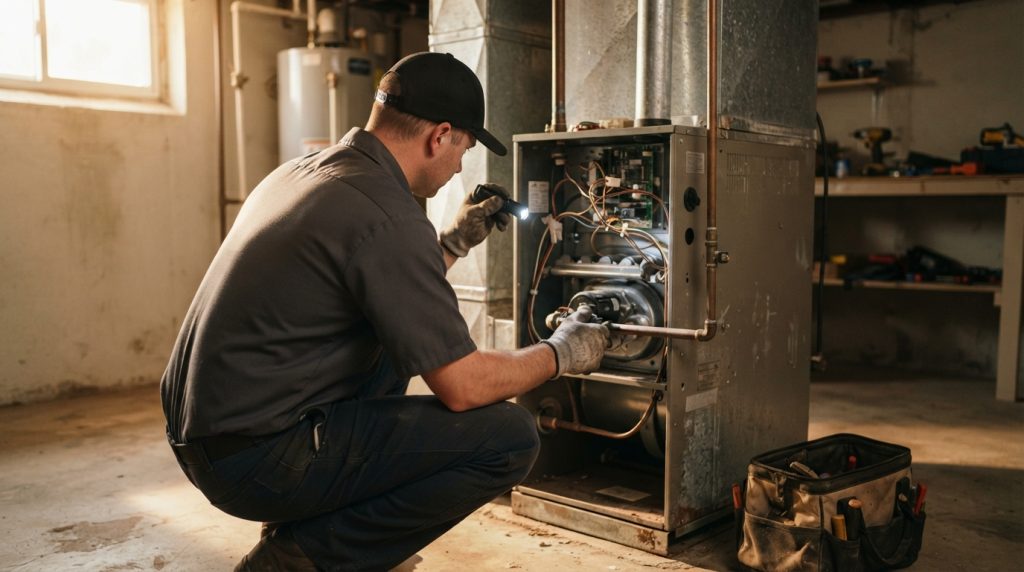
- A full diagnostic check of ignition, airflow, and safety controls.
- A clear, upfront estimate before any repair work begins.
- Replacement of the specific failed part rather than unnecessary component swapping.
- A final safety check, including venting and carbon monoxide readings where applicable.
Repair, Maintenance, or Replacement: Comparing the Options
Not every furnace problem calls for the same response. The table below outlines how the three most common paths compare for an aging or malfunctioning system.
| Option | Best For | Typical Outcome |
| Repair | Isolated part failure (igniter, sensor, switch) | Restores function quickly, lower upfront cost |
| Preventive maintenance | Systems running normally but due for inspection | Reduces breakdown risk, supports efficiency |
| Replacement | Furnaces with recurring failures or heat exchanger damage | Higher upfront cost, addresses safety and efficiency long term |
Choosing between these options usually depends on the age of the equipment, the frequency of past repairs, and whether a component affecting safety, such as the heat exchanger, is involved.
Preventing Future Breakdowns
Most heating failures build up gradually rather than appearing without warning. Homeowners can reduce the chance of an emergency repair call by following a few consistent habits.
- Replace air filters on a monthly basis during heavy-use months to protect airflow and indoor air quality.
- Schedule an annual inspection before the first hard freeze to catch early wear on igniters, sensors, and switches.
- Keep exterior vents clear of snow, ice, and debris so combustion gases exhaust properly.
- Install and test carbon monoxide detectors near sleeping areas every heating season.
These steps do not eliminate the need for repairs entirely, but they do lower the odds of a mid-winter failure and support safer operation of fuel-burning equipment throughout the season.
Frequently Asked Questions
Why is my furnace blowing cold air? Cold air is commonly caused by a faulty igniter, a tripped high-limit switch, or a dirty flame sensor, all of which require hands-on diagnosis to confirm.
How much does furnace repair typically cost? Cost depends on the specific part involved and the extent of the problem; a technician should provide a diagnostic assessment and a clear estimate before starting any work.
Is it safe to troubleshoot a furnace myself? Basic steps like checking the thermostat setting or replacing a filter are safe for homeowners, but anything involving ignition, gas lines, or venting should be handled by a licensed technician due to carbon monoxide risk.
How often should a furnace be inspected? An annual inspection before the heating season begins is the standard recommendation from fire and safety agencies for all fuel-burning heating equipment.
Furnace problems rarely resolve on their own, and in a climate where temperatures regularly drop below freezing for weeks at a time, waiting on a diagnosis carries real risk to comfort and safety alike. Suburban Heating & Air Conditioning has served the Battle Creek area with furnace and HVAC service since 1972, offering same-day appointments and upfront pricing for homeowners dealing with a heating system that is not performing as it should.